Skip to content
ChainringClub

The Best Heart Rate Monitors for Cycling

A strap that cannot talk to your bike computer is an expensive armband. So this page ranks on the one published fact that decides whether the thing works at all — which radios it speaks — and refuses to rank on the accuracy nobody publishes.

A road cyclist riding up a residential street climb.
By Stephen V.Published November 2, 2026How we research

Heads up: we earn a commission if you buy through the links on this page, at no extra cost to you. It never decides what makes the list — here’s how that works.

Quick picks

Tap any row for the full write-up. Specs are the manufacturer's own published claims, read on 2 November 2026.

#ProductBest forPrice
1
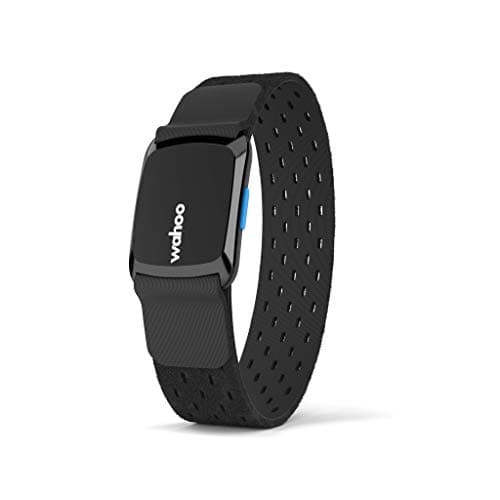
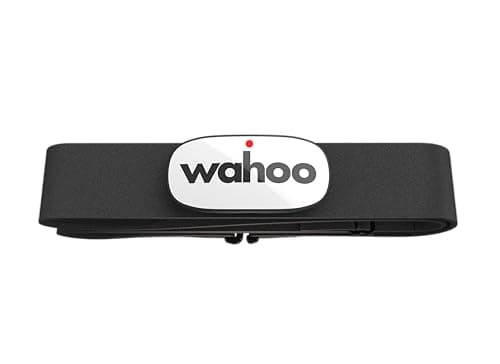
Wahoo TRACKR Heart Rate

Wahoo TRACKR Heart Rate

The most completely specified listing in the entire category: both radios, a battery figure, a water rating, the sensor type and — uniquely — how many devices it can talk to at the same time.

Top pick
Anyone running a head unit and Zwift and a phone from one strap
2
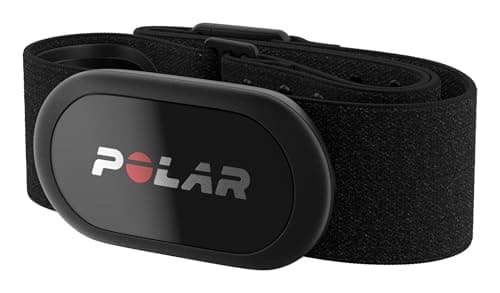
Polar H10

Polar H10

The strap most often used as the reference device in this category, with both protocols and the widest published size range — and a listing that answers the fit question nobody else does.

Riders who want the default answer and the broadest fit
3
Polar H9

Polar H9

The H10's cheaper sibling with the same two published radios and the same published size range — which makes the gap between them a question the listings do not answer.

Riders who want Polar's fit and radios without the flagship price
4
Wahoo TICKR FIT Armband

Wahoo TICKR FIT Armband

The armband answer for riders who cannot stand a chest strap, with both radios, a published battery, a published water code and two strap sizes stated.

Anyone who has given up on chest straps because of chafing
5
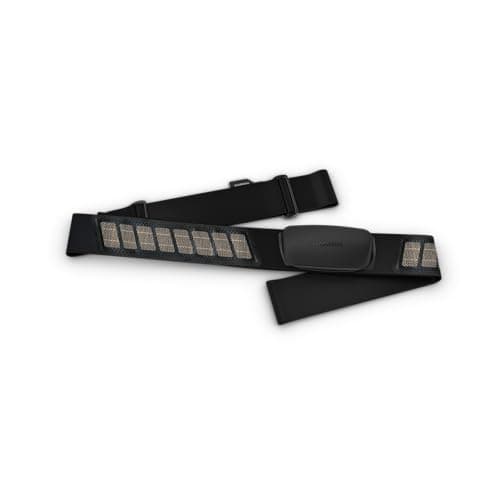
Garmin HRM 200

Garmin HRM 200

Garmin's current mainstream strap, publishing HRV and a washable strap — and not publishing a single word about which radios it speaks, which is the one thing a buyer needs.

Garmin Edge owners buying inside the ecosystem
6
Polar Verity Sense

Polar Verity Sense

The armband that publishes the most radios of any product here — ANT+ plus dual Bluetooth — and is the one optical device a chest-strap household can share.

Swimming, gym and cycling from one sensor
7
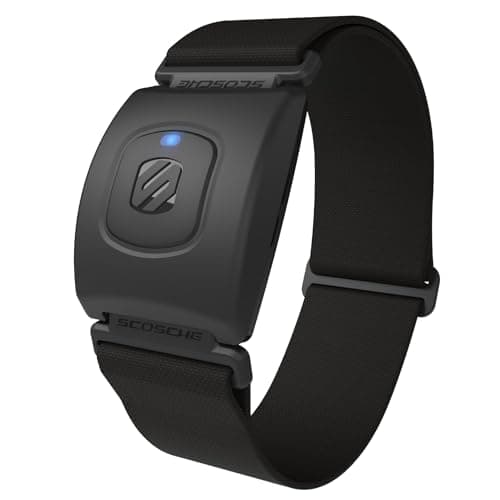
Scosche Rhythm+ 2.0 Armband

Scosche Rhythm+ 2.0 Armband

The best-specified armband here on paper: both radios, the highest published water rating on the page, a battery figure and published HRV and RRi data.

Riders who want armband comfort and a published spec sheet
8
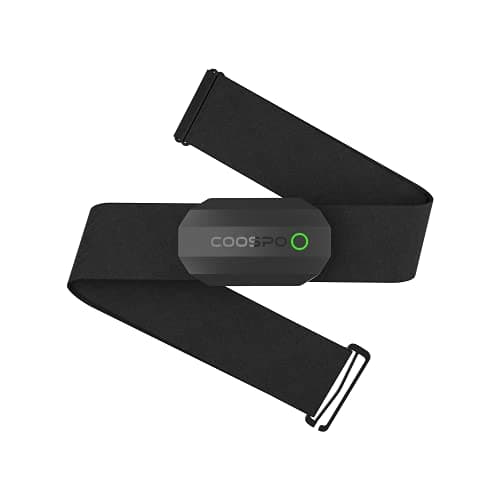
COOSPO H808S Chest Strap

COOSPO H808S Chest Strap

A chest strap that publishes both radios and a real IP code for roughly a quarter of what the reference strap costs, and makes no claim it cannot support.

A second strap, a spare, or a first one for a rider testing the idea
9
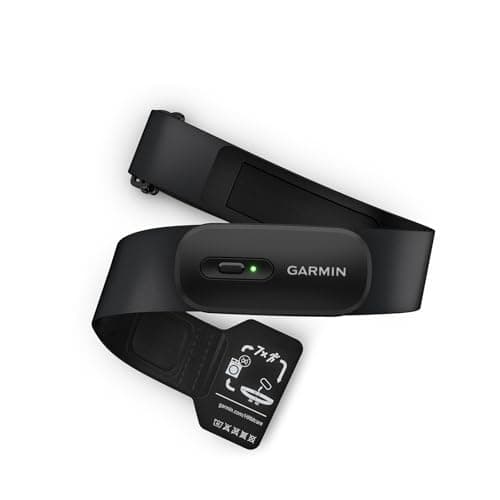
Garmin HRM-Dual

Garmin HRM-Dual

A strap whose entire proposition is in its model name — and a listing that consists of the model name, a color and a part number.

Garmin owners who already know what HRM-Dual means
10
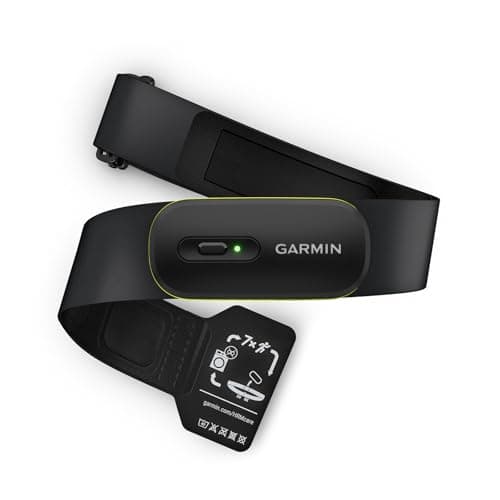
Garmin HRM 600

Garmin HRM 600

The most expensive strap here by a wide margin, built around running metrics — which makes it the hardest product on this page to justify to a cyclist.

Athletes who run as much as they ride and want Garmin's running dynamics

The one thing that can make this purchase fail

A heart rate strap has to talk to something. Which radio it uses decides what it can talk to, and there are two: ANT+, the sports protocol that bike computers and gym equipment speak, and Bluetooth, which phones and tablets speak.

If you ride with a bike computer, you need ANT+ or a computer that also takes Bluetooth. If you ride with your phone or train on Zwift from an iPad, you need Bluetooth. If you do both — and most riders eventually do — you need a strap that publishes both, which the industry calls dual-band.

Everything else about a heart rate monitor is a preference. This is the one specification that can leave you with a device that physically cannot connect to the thing you bought it for. So it is the ranking axis.

Eleven of fourteen publish both radios. The three that publish neither are the expensive ones.

We read all fourteen live listings on 2 November 2026 and counted. Eleven publish both ANT+ and Bluetooth in the listing text, in a variety of phrasings: “ANT + Bluetooth”, “ANT + / Bluetooth”, “Bluetooth and ANT+”, “ANT+ BLE”, “ANT+, Dual Bluetooth”. The phrasing is inconsistent; the fact is unambiguous.

Three publish neither.They are the Garmin HRM-Dual, the Garmin HRM 200 and the Garmin HRM 600 — and they are, in that order, three of the four most expensive products in this roundup. One of them has the word “Dual” in its name, which is a strong hint and is not a published specification. The other two publish HRV, running dynamics, washability and durability, and say nothing about how the data leaves the strap.

We are not calling that a defect in the hardware. Garmin’s straps are the straps Garmin’s own head units are designed around, and anyone pairing one to an Edge is on safe ground. We are calling it a defect in the listing, which is the only thing a buyer can read before the money leaves. And on a page that ranks what sellers publish, it costs those three products their position.

Chest strap or armband: an electrical signal versus a reflected light

The two formats measure completely different things. A chest strap sits over the sternum and reads the electrical signalyour heart muscle generates — the same signal an ECG reads, which is why one listing here calls its sensor an ECG chest sensor. An armband shines light into the skin and measures how much comes back as blood pulses through, which is optical sensing, the same technique a smartwatch uses.

Electrical measurement responds faster to a change in effort and is less bothered by cold hands, a loose fit or vibration. Optical measurement is far more comfortable, needs no wetting before it works, and does not chafe. That trade-off is a design fact, not a product ranking: ten of these fourteen are chest straps and four are armbands, and both formats are represented in the top five here on purpose.

What no listing on this page publishes — not one of fourteen — is an accuracy figure. No error margin, no validation study, no comparison against a clinical ECG. Several publish the word “Accurate”. That word is not a number, and this page will not pretend it is one. If accuracy under hard efforts is your priority, the design argument above is the best guide available, and it points at a chest strap.

Battery: four publish a figure, and they are not comparable

Four of fourteen listings publish a battery life: 100 hours (Wahoo TRACKR), 30 hours (Wahoo TICKR FIT), 24 hours (Scosche) and 800 hours (GEOID, in the Essentials block below). That looks like a 33x spread and it is not, because the first three are rechargeable and the fourth is a replaceable coin cell.

Those are different products with different ownership experiences. A rechargeable strap gives you a long runtime and a cable to remember; a coin-cell strap runs for a year or two and then needs a CR2032 and a coin to open the back. Ten listings here publish nothing at all about the battery, and most of those ten are coin-cell devices — which is the one case where silence is reasonably harmless, because a coin cell is a coin cell.

Water: four publish a code, two publish an adjective, eight publish nothing

The published water ratings across this field are IP68, IPX7 (twice) and IP67(twice) — actual codes, meaning something specific about depth and duration. Two listings use the word “Waterproof” with no code attached, and both of those are from the brand most associated with swimming.

This matters more than it sounds for a cyclist, because a heart rate strap is the one piece of electronics you will reliably get sweat into, and because the strap goes in the wash. Two listings publish that the strap is machine washable; twelve do not.

Nobody publishes a chest measurement

Six of fourteen listings publish a size range: M-XXL twice, M-XL twice, S-L once and “2 Strap Sizes” once. Eight publish nothing at all.

And zero of fourteen publish a circumference in inches or centimeters. So an M-XXL and an S-L are labels on two different scales for two different body parts, with no shared unit between them, and a rider at either end of the range has no way to check before buying. This is the same problem our shoe cover roundup found in apparel, appearing again in electronics: a size exists, a measurement does not.

The practical consequence: if you are at the large end, buy from a listing that publishes M-XXL rather than M-XL. If you are at the small end and want an armband, the one armband that publishes a range publishes S-L.

Four budget straps that publish both radios

Not a ranking. These four are the cheap end of the category and all four publish the thing the three most expensive listings here do not — both ANT+ and Bluetooth. If your only requirement is a number on a head unit, any of them meets it; what you give up is brand support, replacement bands and, in three cases, any published size at all.

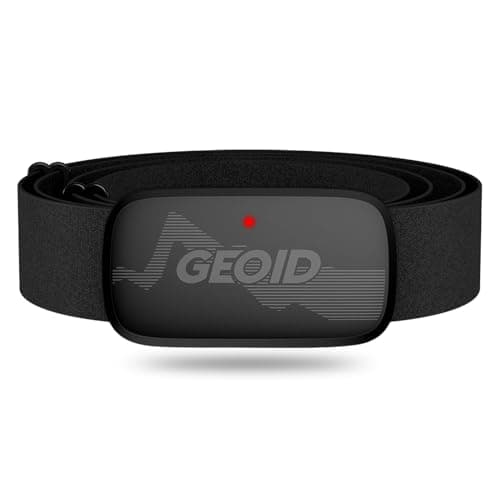
  • GEOID HS500

    GEOID HS500

    The battery answer. ANT+ and Bluetooth published, IP67 published, and an 800-hour battery published — the longest runtime figure of any product on this page, because it is a coin cell rather than a rechargeable. Compatible with iOS and Android apps per the listing.

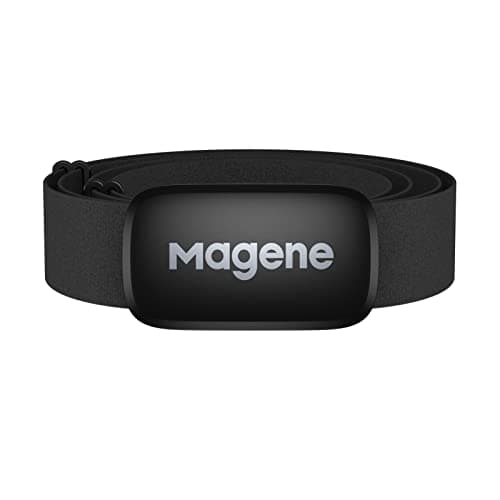
  • Magene H64

    Magene H64

    The cheapest dual-protocol chest strap here. ANT+ and Bluetooth published, compatible with iOS and Android apps. Nothing published about battery, water rating or size — this is the strap you buy when the only requirement is that the number appears.

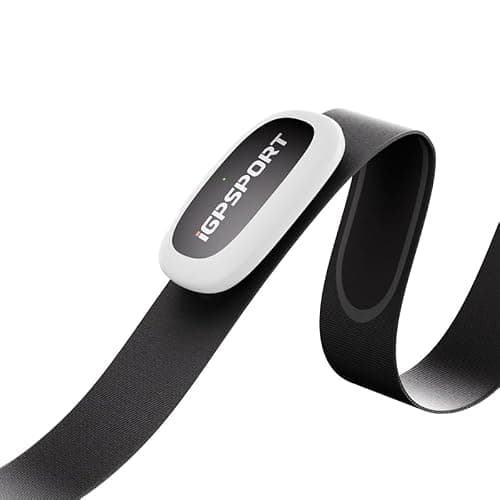
  • iGPSPORT HR50

    iGPSPORT HR50

    The one budget listing written for cyclists: published as connecting with a bike computer or sports watch, Bluetooth and ANT+, and published as waterproof without a code. A sensible pairing with a budget head unit.

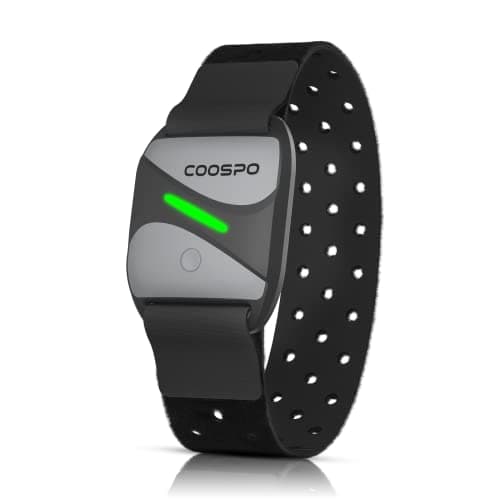
  • COOSPO HW807 Armband

    COOSPO HW807 Armband

    A budget armband rather than a chest strap, with Bluetooth 5.0 and ANT+ published, an HR zone LED indicator on the unit itself, and published compatibility with Peloton, Polar, Wahoo and Strava. The LED is the only on-body zone readout in this roundup.

We haven’t tested any of these — they’re the parts the job above calls for, listed so you don’t have to go hunting. Prices are live from Amazon and we earn a commission if you buy. Prices as of November 16, 2026. #ad

What a heart rate strap is for on a bike, and what it is not

Heart rate is a measure of what the effort is costing you. It responds to heat, dehydration, caffeine, sleep and stress, which is exactly why it is useful: it tells you what today’s version of you is actually doing, rather than what the pedals are doing.

That is also its limitation. It lags — it takes tens of seconds to catch up with a sudden effort, which makes it a poor tool for a 30-second interval and an excellent one for a three-hour endurance ride. If you want the instantaneous number, that is a power meter, which measures the work you are doing rather than the cost of doing it, and our guide to power meter types explains why it costs an order of magnitude more.

There is one setup where a strap stops being the cheap option and becomes the only one: a budget indoor trainer. Of the seven trainers with a live price under three hundred dollars, one publishes any wireless protocol at all — so on the other six, the number has to come from a strap like these or from nothing.

Most riders are better served by a strap first. It is the cheapest piece of training data you can buy, it works indoors on a trainer and outdoors on a climb, and every head unit on the market already has a screen waiting for it. It is also the only honest way to answer the question our e-bike exercise page keeps running into: you cannot tell how hard you worked on an assisted bike by looking at the speed.

What this page refuses to tell you

It will not rank these on accuracy, because not one of fourteen listings publishes an accuracy figure and this site measures nothing. It will not tell you that chest straps are “more accurate” as a finding; it tells you that they measure an electrical signal and armbands measure reflected light, and lets you draw the obvious conclusion from the mechanism.

It will not tell you which strap fits you, because no listing publishes a chest or arm circumference. And it will not tell you that the expensive straps are bad — Garmin’s hardware pairs with Garmin’s computers and always has. It tells you that three listings charge the most and publish the least, which is a fact about the pages, not a verdict on the products.

Two radios, a battery, a water code and a size — what fourteen listings publish

Read from the live Amazon listing for each linked ASIN on 2 November 2026. A dash is a listing that does not say — not a no. Battery figures are not comparable across rows: some are rechargeable and some are coin cells.

MonitorFormatProtocols publishedBattery publishedWater publishedSize published
Wahoo TRACKR Heart RateChest (ECG)Bluetooth + ANT+100 h rechargeableIPX7—
Polar H10ChestANT+ + Bluetooth—“Waterproof”M-XXL
Polar H9ChestANT+ / Bluetooth—“Waterproof”M-XXL
Wahoo TICKR FITArmband (optical)Bluetooth + ANT+30 h rechargeableIPX72 strap sizes
Garmin HRM 200Chest———M-XL
Polar Verity SenseArmband (optical)ANT+ + dual Bluetooth——S-L
Scosche Rhythm+ 2.0Armband (optical)Bluetooth + ANT+24 h rechargeableIP68—
COOSPO H808SChestANT+ + BLE—IP67—
Garmin HRM-DualChest————
Garmin HRM 600Chest———M-XL
GEOID HS500ChestANT+ / Bluetooth800 h coin cellIP67—
Magene H64ChestANT+ / Bluetooth———
iGPSPORT HR50ChestBluetooth + ANT+—“Waterproof”—
COOSPO HW807Armband (optical)Bluetooth 5.0 + ANT+———

Eleven of fourteen publish both protocols. Four publish a battery figure and they are not comparable. Five publish an IP code, three publish the word “waterproof” instead, and six publish nothing about water. Six publish a size label and zero publish a circumference. And not one of the fourteen publishes an accuracy figure.

The picks, in detail

1

Wahoo TRACKR Heart Rate

Top pick
Wahoo TRACKR Heart Rate
$97.35 · View on Amazon

Price as of November 16, 2026. #ad

Best for: Anyone running a head unit and Zwift and a phone from one strap

The most completely specified listing in the entire category: both radios, a battery figure, a water rating, the sensor type and — uniquely — how many devices it can talk to at the same time.

  • Listing: Bluetooth and ANT+ ECG HRM
  • Listing: Rechargeable, Up to 100hr
  • Listing: 3 Bluetooth Connections at Once
  • Listing: IPX7
  • Listing: ECG Chest Sensor, LED Status

Good

  • Both protocols published explicitly, which means it pairs with a bike computer over ANT+ and a phone over Bluetooth without you having to find out the hard way
  • "3 Bluetooth Connections at Once" is published by exactly one product in this roundup, and it is the difference between a strap that feeds your head unit AND the trainer app and one that makes you choose
  • 100 hours rechargeable is the longest published runtime of any rechargeable strap here, more than three times the next one
  • IPX7 is a published code rather than the word "waterproof", and an LED status light is the only published way to confirm the thing is awake before you start the ride

Less good

  • Rechargeable means a cable and a habit. A coin-cell strap you forget about for a year is genuinely less hassle for a rider who trains twice a week
  • The listing publishes no strap size or chest range, so fit is unverifiable before it arrives — a problem shared by every product on this page
  • No accuracy figure is published, and the word ECG describes the measurement method rather than a validated result
  • One of the more expensive straps here, and the cheapest chest strap in this roundup publishes the same two radios

Skip it if: You want to fit a battery once and never think about it again. A rechargeable strap is one more thing on the charging shelf.

2

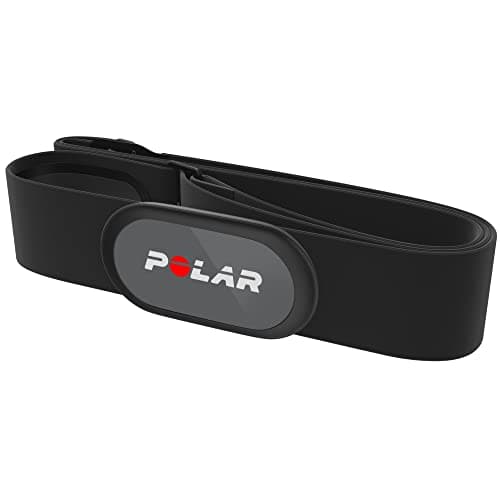
Polar H10

Polar H10
$99.00 · View on Amazon

$104.95 −6%

Price as of November 16, 2026. #ad

Best for: Riders who want the default answer and the broadest fit

The strap most often used as the reference device in this category, with both protocols and the widest published size range — and a listing that answers the fit question nobody else does.

  • Listing: ANT + Bluetooth
  • Listing: Waterproof HR Sensor
  • Listing: Chest Strap
  • Listing: M-XXL
  • Listing: for Men and Women

Good

  • Both radios published, so it works with a bike computer and a phone and a gym treadmill without a compatibility hunt
  • M-XXL published is the widest size range in this roundup alongside the H9, which matters because an armband sized S-L and a strap sized M-XL exclude opposite ends of the same population
  • Polar's H-series is the strap research groups and coaches reach for by default, and that reputation is the reason it holds its price
  • A chest strap reads the heart's electrical signal rather than the light reflected off an arm, which is why chest straps remain the format for interval work

Less good

  • "Waterproof" with no IP code behind it. Four products here publish an actual rating; this publishes an adjective
  • No battery figure published at all, on a coin-cell product where runtime is a genuine purchase factor
  • The most expensive chest strap in this roundup by list price and the listing publishes fewer specifications than the Wahoo above it
  • No chest circumference published for any of the four sizes, so "M-XXL" is a label rather than a measurement

Skip it if: You want a published water rating or a published battery life. On those two specific tests this listing loses to products at a third of the price.

3

Polar H9

Polar H9
$69.90 · View on Amazon

Price as of November 16, 2026. #ad

Best for: Riders who want Polar's fit and radios without the flagship price

The H10's cheaper sibling with the same two published radios and the same published size range — which makes the gap between them a question the listings do not answer.

  • Listing: ANT + / Bluetooth
  • Listing: Waterproof HR Monitor
  • Listing: Soft Chest Strap
  • Listing: M-XXL
  • Listing: Heart Rate Sensor

Good

  • Both protocols published, exactly as on the H10 — so for the single most important compatibility question, the cheaper Polar and the expensive Polar are the same product
  • M-XXL published, matching the widest range in this roundup
  • "Soft Chest Strap" is a published material characteristic on a product whose most common complaint is chafing
  • Meaningfully cheaper than the H10 while publishing the same radios, the same water claim and the same sizes

Less good

  • The listing gives you no way to tell what you give up against the H10 — the specifications published are identical, so the price difference is unexplained on the page
  • "Waterproof" again, with no IP code
  • No battery figure published
  • No memory or offline-recording claim published, which is the feature a swimmer or a rider without a head unit would actually be choosing between these two for

Skip it if: You want to know why the flagship costs more. Neither listing tells you, and buying blind on that gap is how people end up with both.

4

Wahoo TICKR FIT Armband

Wahoo TICKR FIT Armband
$89.00 · View on Amazon

Price as of November 16, 2026. #ad

Best for: Anyone who has given up on chest straps because of chafing

The armband answer for riders who cannot stand a chest strap, with both radios, a published battery, a published water code and two strap sizes stated.

  • Listing: Bluetooth and ANT+ Optical HRM
  • Listing: Optical Arm Heart Rate Sensor, No Chest Strap
  • Listing: 30hr Rechargeable Battery
  • Listing: IPX7
  • Listing: 2 Strap Sizes

Good

  • Both protocols published on an armband, which is less common than it should be and is the whole reason this one ranks above two cheaper armbands
  • 30 hours rechargeable published, and an armband is the format you are most likely to leave on charge because it comes off after every ride anyway
  • IPX7 published rather than an adjective
  • The forearm is a far better optical site than the wrist: less bone, more muscle, and the sensor is not fighting a watch strap

Less good

  • Optical sensing reads blood flow through skin and is sensitive to fit, cold and motion. None of that is a defect in this product and all of it is true of every armband here
  • No accuracy figure published, and no listing on this page publishes one
  • "2 Strap Sizes" is published but neither size is published as a measurement
  • More expensive than two armbands below it that publish a longer battery life

Skip it if: You do structured interval training where the first 30 seconds of each effort matter. Optical sensors lag a sharp change in effort more than an electrical chest strap does.

5

Garmin HRM 200

Garmin HRM 200
$79.99 · View on Amazon

Price as of November 16, 2026. #ad

Best for: Garmin Edge owners buying inside the ecosystem

Garmin's current mainstream strap, publishing HRV and a washable strap — and not publishing a single word about which radios it speaks, which is the one thing a buyer needs.

  • Listing: Captures Accurate Heart Rate & HRV
  • Listing: Machine Washable Strap
  • Listing: Durable & Built to Last
  • Listing: M-XL
  • Listing publishes no transmission protocol

Good

  • A machine-washable strap is a genuinely useful published fact on a product worn against skin for hours — and only two listings in this roundup publish it
  • HRV capture is published, which is the metric Garmin's own training-status features are built on
  • Garmin is the brand behind the head units this strap is most likely to be paired with, which makes ecosystem behavior the safest bet in the category even when the listing does not say so
  • M-XL published, so there is at least a size range on the page

Less good

  • The listing publishes no protocol. Not ANT+, not Bluetooth, not the word "dual". On a page where eleven of fourteen competitors publish both, that is the omission that costs this strap four places
  • "Durable & Built to Last" and "Accurate Heart Rate" are adjectives, not specifications — there is no durability standard and no accuracy figure behind either
  • No battery figure and no water rating published
  • M-XL excludes the top of the range that both Polars publish as M-XXL

Skip it if: You want to pair it with something that is not a Garmin. The listing gives you nothing to check compatibility against before you buy.

6

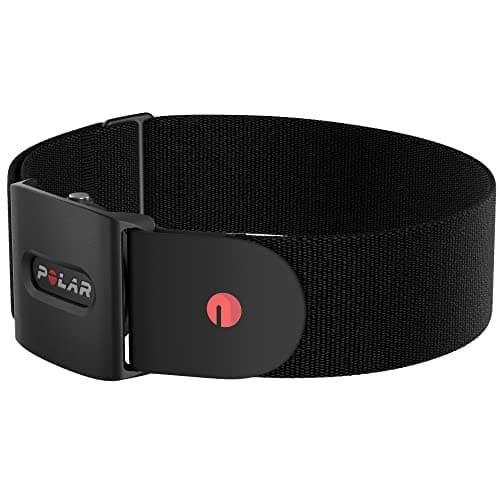
Polar Verity Sense

Polar Verity Sense
$104.95 · View on Amazon

Price as of November 16, 2026. #ad

Best for: Swimming, gym and cycling from one sensor

The armband that publishes the most radios of any product here — ANT+ plus dual Bluetooth — and is the one optical device a chest-strap household can share.

  • Listing: Optical Heart Rate Monitor Armband
  • Listing: ANT+, Dual Bluetooth
  • Listing: S-L
  • Listing: Black
  • Listing: Polar Verity Sense

Good

  • "ANT+, Dual Bluetooth" published is the most radio capability stated by any listing in this roundup — dual Bluetooth means two apps at once as well as the head unit
  • An armband worn on the upper arm is the one format that works under a wetsuit, under a jersey, and in a gym where a chest strap is uncomfortable
  • Polar's optical sensing is the reason this device is used well outside cycling, which makes it the most shareable product on this page
  • No chest strap means nothing to chafe and nothing to wet before it reads properly

Less good

  • S-L published is the narrowest size range on this page. If your upper arm is at the large end, this is the listing most likely to exclude you and it does not publish a circumference
  • No battery figure and no water rating published, despite being the product most likely to be taken swimming
  • Optical, so the same motion and cold caveats as every armband here
  • Expensive for an armband, and two cheaper armbands publish a battery life it does not

Skip it if: You have large upper arms. S-L is the published range and no measurement is given to check it against.

7

Scosche Rhythm+ 2.0 Armband

Scosche Rhythm+ 2.0 Armband
$49.99 · View on Amazon

Price as of November 16, 2026. #ad

Best for: Riders who want armband comfort and a published spec sheet

The best-specified armband here on paper: both radios, the highest published water rating on the page, a battery figure and published HRV and RRi data.

  • Listing: Bluetooth, ANT+
  • Listing: Optical Sensor for HRV & RRi Data
  • Listing: IP68 Waterproof
  • Listing: 24hr Battery Life
  • Listing: for Running, Cycling, Exercise & Recovery

Good

  • IP68 is the highest published water rating of any product in this roundup — higher than the two IPX7 devices and far more specific than the two that say "Waterproof"
  • Both radios published, and RRi (beat-to-beat interval) data is published, which is the raw input any serious HRV analysis actually needs
  • 24 hours is published, which is more than most riders need between charges and is a real number rather than a silence
  • Priced below both Polar armbands and below the Wahoo armband while publishing more than any of them

Less good

  • 24 hours is the shortest published rechargeable runtime on this page — a quarter of the Wahoo TRACKR's figure
  • Optical sensing on the forearm, with the same lag and fit caveats as every armband here
  • No size or fit range published at all, which is worse than the S-L the Polar armband at least states
  • Scosche is not a cycling brand, so head-unit-specific support is less certain than with Wahoo, Polar or Garmin

Skip it if: You want the longest time between charges. On published figures this is the shortest-running rechargeable device on the page.

8

COOSPO H808S Chest Strap

COOSPO H808S Chest Strap
$36.99 · View on Amazon

Price as of November 16, 2026. #ad

Best for: A second strap, a spare, or a first one for a rider testing the idea

A chest strap that publishes both radios and a real IP code for roughly a quarter of what the reference strap costs, and makes no claim it cannot support.

  • Listing: ANT+ BLE HR Monitor Chest
  • Listing: Bluetooth Heart Rate Monitor Chest Strap
  • Listing: HRM IP67 Waterproof
  • Listing: Use for Running Cycling Gym and Other Sports
  • Listing: H808S

Good

  • Both radios published — the single most important fact in this category — at the lowest price of any chest strap on this page
  • IP67 is a published code, which puts it ahead of both Polars on the one specification they state as an adjective
  • Chest strap format, so it is an electrical measurement rather than an optical one
  • The obvious strap to own as a spare, or to hand to a partner who is not sure they want to train with heart rate yet

Less good

  • No battery figure published, no size range published and no strap measurement published
  • No brand service history to speak of — if the strap perishes in two years there is no spare-parts route the way there is with Polar
  • Nothing published about HRV or beat-to-beat data, so it is a heart rate number and little else
  • IP67 is one step below the IP68 published on the best-specified armband here

Skip it if: You want a strap you can still buy a replacement band for in three years. Buy the Polar or the Garmin for that.

9

Garmin HRM-Dual

Garmin HRM-Dual
$66.75 · View on Amazon

Price as of November 16, 2026. #ad

Best for: Garmin owners who already know what HRM-Dual means

A strap whose entire proposition is in its model name — and a listing that consists of the model name, a color and a part number.

  • Listing: Garmin HRM-Dual Heart Rate Monitor
  • Listing: Black
  • Listing: 010-12883-00
  • Listing publishes no transmission protocol
  • Listing publishes no battery, size or water rating

Good

  • The HRM-Dual is the strap Garmin ships with and recommends for its Edge computers, so ecosystem behavior is as safe as it gets in this category
  • A replaceable coin cell rather than a charging cable, which suits a strap you use weekly rather than daily
  • Garmin sells replacement straps for its HRM line, which is a real ownership advantage over the unbranded options
  • The part number in the title at least makes the exact model unambiguous, which is more than some listings here manage

Less good

  • The listing publishes nothing. No protocol, no battery, no size, no water rating — the model name carries the whole specification and a model name is not a specification
  • The word "Dual" is doing the work that eleven competing listings do explicitly, in text, on the page
  • No size range published, which on a chest strap is the fit question
  • Costs multiple times what a strap publishing both radios, an IP code and a format costs

Skip it if: You are choosing between products on what they publish. On that test this is the thinnest listing in the roundup.

10

Garmin HRM 600

Garmin HRM 600
$156.99 · View on Amazon

$169.99 −8%

Price as of November 16, 2026. #ad

Best for: Athletes who run as much as they ride and want Garmin's running dynamics

The most expensive strap here by a wide margin, built around running metrics — which makes it the hardest product on this page to justify to a cyclist.

  • Listing: Premium Heart Rate Monitor
  • Listing: Real-Time Heart Rate & HRV Data
  • Listing: Running Dynamics
  • Listing: Machine-Washable
  • Listing: M-XL

Good

  • Running dynamics — cadence, ground contact, vertical oscillation — are published, and no other strap in this roundup publishes anything comparable
  • Real-time HRV is published, which feeds Garmin's training readiness features directly
  • Machine-washable is published on a premium product, which it should be at this price and frequently is not
  • M-XL published, so there is a stated size range

Less good

  • Running dynamics do nothing on a bike. The headline feature of the most expensive strap on this page is irrelevant to the sport this page is about
  • No transmission protocol published — the third Garmin listing in a row to omit the one fact that decides compatibility
  • No battery figure and no water rating published
  • Several multiples of the price of a strap that publishes both radios, an IP code and a format

Skip it if: You only ride. You are paying a large premium for metrics that exist when your feet hit the ground.

What actually decides this purchase

Check both radios before anything else. ANT+ for a bike computer, Bluetooth for a phone or a trainer app. Eleven of these fourteen listings publish both; the three that publish neither are the three most expensive.

Pick the format on comfort, not on a claimed accuracy. A chest strap reads an electrical signal and reacts faster to a change in effort; an armband reads reflected light and does not chafe. No listing here publishes an accuracy number, so the mechanism is the only honest guide.

If you are at the large end of the size range, buy a listing that says M-XXL. Nothing in this category publishes a chest measurement, so the label is all you get, and M-XL and M-XXL are not the same label.

Decide rechargeable versus coin cell deliberately. Rechargeable runs 24 to 100 published hours and needs a cable; a coin cell runs for a year or more and needs a CR2032 once. If you ride weekly rather than daily, the coin cell is the quieter life.

Prefer a published IP code to the word “waterproof”. Five listings here publish IP67, IPX7 or IP68. Three use an adjective instead. You are buying electronics that will live in sweat.

Buy the cheap strap first if you are unsure. A dual-protocol chest strap costs a fraction of a flagship and produces the same number on the same screen. You can always upgrade to the brand with replacement bands once you know you will keep using it.

If you want instantaneous effort rather than its cost, you want a power meter. Heart rate lags by tens of seconds by nature. That is a property of the body, not a flaw in any of these.

Common questions

Do I need ANT+ or Bluetooth for a cycling heart rate monitor?

Both, if you can. ANT+ is what bike computers and gym machines speak; Bluetooth is what phones and tablets speak. A dual-band strap pairs with your head uniton one protocol and your phone on the other, often at the same time. Eleven of the fourteen listings in this roundup publish both. Three publish neither — and those three are the most expensive straps on the page, so check the manufacturer’s own specification before you commit.

Is a chest strap more accurate than an armband for cycling?

No listing in this roundup publishes an accuracy figure, so we will not state one. What is published, and what is a matter of design rather than opinion: a chest strap measures the heart’s electrical signal directly, and an armband measures light reflected off blood flowing under the skin. The electrical measurement responds faster to a sudden change in effort and is less affected by cold or a loose fit. The optical one is far more comfortable. Pick the one you will actually wear.

How long does a heart rate monitor battery last?

Four of fourteen listings publish a figure: 100 hours, 30 hours and 24 hours for the rechargeable units, and 800 hours for one coin-cell strap. Those are not comparable numbers. Rechargeable straps give you a long run and a charging cable to remember; coin-cell straps run for a year or two of normal riding and then take a CR2032. Ten listings publish nothing about the battery at all.

Can you use a heart rate monitor with Zwift and a bike computer at the same time?

Usually yes, and one listing in this roundup is explicit about it: the Wahoo TRACKR publishes “3 Bluetooth Connections at Once”. In general a dual-band strap can feed ANT+ to a head unit and Bluetooth to an app simultaneously, because they are separate radios. What varies between products — and what only one listing here quantifies — is how many Bluetooth devices can connect at the same time.

What size heart rate strap do I need?

The listings cannot tell you. Six of fourteen publish a size label (M-XXL, M-XL, S-L or “2 strap sizes”) and none of the fourteen publishes a chest or arm circumference. The practical rule: if you are at the large end, choose a listing that publishes M-XXL rather than M-XL, and check the maker’s own size chart before ordering. It is the same gap our shoe cover roundup found in apparel.

Heart rate monitor or power meter — which should I buy first?

A heart rate strap, almost always. It costs a small fraction of a power meter, works on every bike you own including an e-bike, and every head unit already has a screen for it. A power meter measures the work you are doing; heart rate measures what that work is costing you today. The second question is useful long before the first one is worth its price.

Why does my heart rate strap read erratically at the start of a ride?

A dry electrode strap does not make good contact with dry skin. Wetting the two contact pads before you put the strap on is standard practice and fixes most of it. Cold weather makes it worse, because skin is drier and peripheral blood flow is lower — which is also why optical armbands struggle in the first ten minutes of a cold ride. Neither is a fault in the device.

Sources

  • Live Amazon listings for all fourteen heart rate monitors, read 2 November 2026 — the source for every “Listing:” specification above, including Wahoo's “TRACKR HEART RATE Monitor Chest Strap, Bluetooth and ANT+ ECG HRM | ECG Chest Sensor • Rechargeable, Up to 100hr • Bluetooth and ANT+ • 3 Bluetooth Connections at Once • IPX7 • LED Status”, Polar's “H10 Heart Rate Monitor Chest Strap - ANT + Bluetooth, Waterproof HR Sensor for Men and Women, Black, M-XXL”, Polar's “H9 Heart Rate Sensor – ANT + / Bluetooth - Waterproof HR Monitor with Soft Chest Strap, M-XXL”, Wahoo's “TICKR FIT Armband Heart Rate Monitor, Bluetooth and ANT+ Optical HRM | Optical Arm Heart Rate Sensor • No Chest Strap • Bluetooth and ANT+ • 30hr Rechargeable Battery • IPX7 • 2 Strap Sizes”, Garmin's “HRM 200 Heart Rate Monitor, M-XL | Captures Accurate Heart Rate & HRV, Durable & Built to Last, Machine Washable Strap”, Polar's “Verity Sense - Optical Heart Rate Monitor Armband - ANT+, Dual Bluetooth, Black, S-L”, Scosche's “Rhythm+ 2.0 Heart Rate Monitor Armband for Running, Cycling, Exercise & Recovery with Bluetooth, ANT+, Optical Sensor for HRV & RRi Data, IP68 Waterproof Fitness Tracker with 24hr Battery Life”, COOSPO's “Bluetooth Heart Rate Monitor Chest Strap H808S, ANT+ BLE HR Monitor Chest, HRM IP67 Waterproof”, the complete “Garmin HRM-Dual Heart Rate Monitor, Black - 010-12883-00”, Garmin's “HRM 600, Premium Heart Rate Monitor, M-XL | Built for Data-Driven Performance Athletes, Real-Time Heart Rate & HRV Data, Running Dynamics, Machine-Washable”, GEOID's “HS500 Heart Rate Monitor, Heart Rate Sensor Chest Strap, Protocol ANT+/Bluetooth, 800h Battery, IP67 Waterproof”, Magene's “H64 Heart Rate Monitor, Heart Rate Sensor Chest Strap, Protocol ANT+/Bluetooth, Compatible with iOS/Android APPs (New H64)”, iGPSPORT's “HR50 Cycling Sports Sensor Chest Strap, Waterproof Bluetooth ANT+ | Connect with Bike Computer Sports Watch” and COOSPO's “Heart Rate Monitor Armband HW807, Bluetooth 5.0 ANT+ HRM with HR Zone LED Indicator” — retrieved 2026-11-02
  • Not used: no accuracy test, no validation study, no comparison against a clinical ECG and no manufacturer datasheet is cited on this page. No product here is credited with an accuracy figure, because no listing publishes one and none was measured. The electrical-versus-optical discussion describes how the two sensor types work and attaches no error margin to either — retrieved 2026-11-02
  • Google Autocomplete, 2 November 2026 — `best heart rate monitor for cycling` returns `…and running`, `…2026`, `…reddit`, `best heart rate sensor for cycling`, `best heart rate monitor for biking`, `best garmin heart rate monitor for cycling` — retrieved 2026-11-02

We haven’t ridden or tested any of the products on this page, and we don’t pretend otherwise. Read how we research — or tell us we’re wrong and we’ll log the correction.