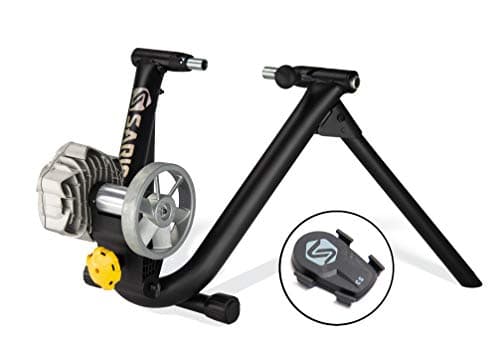
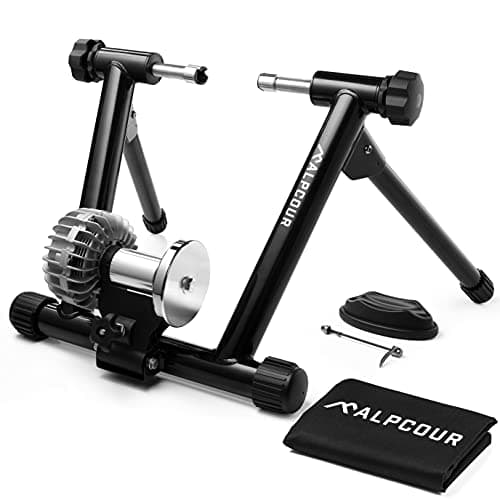
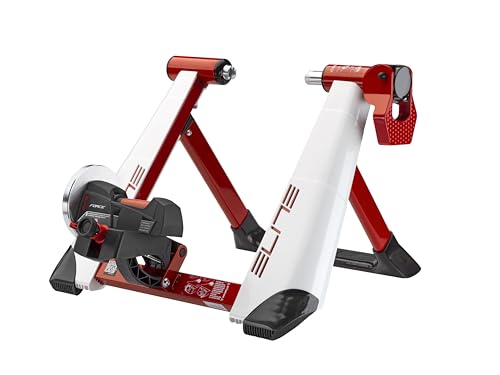
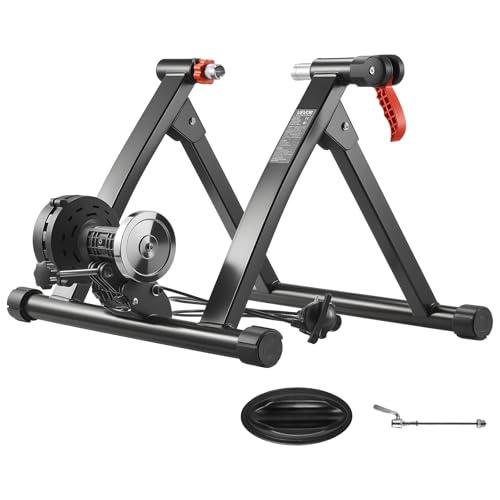
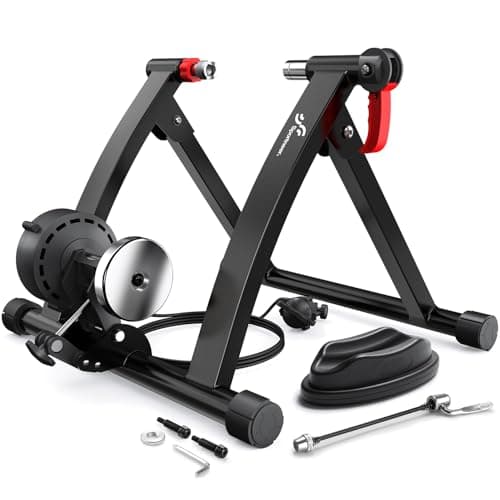
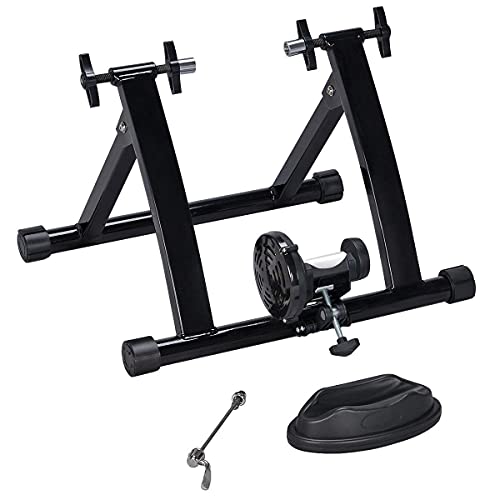
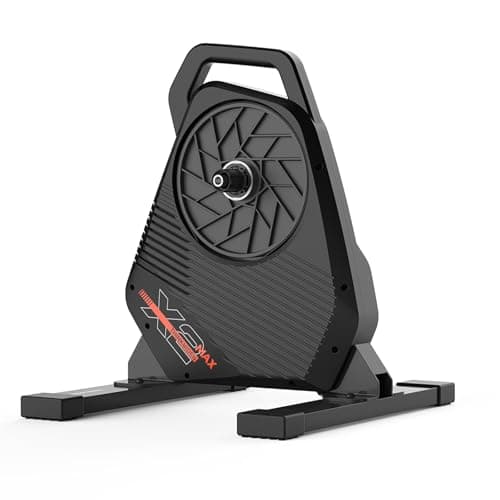
The cap on this page buys a frame, a resistance unit and almost no information. Of the seven trainers with a live price under $300, exactly one publishes a wattage, a simulated gradient or a wireless protocol. None publishes a power accuracy figure. None publishes a noise figure. Two publish a count of resistance “levels”, which is a number of positions rather than a measurement of anything.
That is not a reason to skip the category — a cheap trainer that gets ridden beats an expensive one bought in March. It is a reason to rank these on the two questions that actually separate them: can the trainer produce a number by itself, and what does the listing admit is missing from the box.
Why this is not the main trainer roundup with the top five deleted
Our full trainer roundupranks on how the bike connects — direct drive, roller, wheel-on fluid, wheel-on magnetic — because above this cap that is the decision. Below it, the question answers itself: six of the seven units here are wheel-on, and the entire podium of that page (the KICKR V6, the Rivo, the Direto XR, the NEO 2T, the ROLLR) is above the line. So the field here is genuinely different and it needs a different axis.
The axis is disclosure plus mechanism. A trainer that publishes watts and speaks ANT+ goes first because it can be controlled and recorded. Then the two fluid units, because fluid resistance rises with wheel speed and that is closer to how air behaves than a stepped magnet is. Then the magnetic units, ordered by what their listings actually commit to — a level count, a wheel-size range, a skewer and a riser block.
What “smart” means below the line, which is nothing
One trainer under this cap publishes a protocol. Everything else is what the category used to call a dumb trainer, and the honest consequence is that the trainer cannot tell you anything about your ride. If you want numbers from a sub-cap setup, the number has to come from a sensor you own rather than from the trainer:
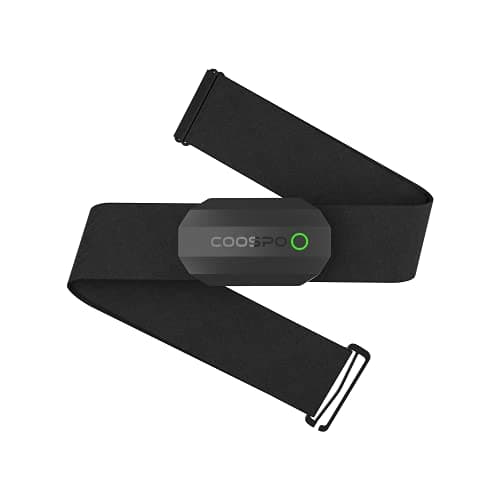
- Heart rate is the cheap answer. A chest strap pairs with a phone or a head unit and gives you a training signal the trainer never will. Our heart rate monitor roundup ranks the category on whether the listing publishes both ANT+ and Bluetooth, which is the thing that decides whether it talks to what you own.
- Power is the expensive answer. A pedal-based meter costs several times any trainer on this page and moves between bikes; the power meter roundup covers what gets published and what does not.
- Virtual riding needs one of the two. Apps that simulate a course want either controllable resistance or a power source to read. A dumb trainer plus a heart strap is a workout; it is not a virtual race.
The cost nobody puts in the price: the rear tire
Every wheel-on trainer here presses a roller into your rear tire and spins it against rubber that was designed for tarmac. The tire wears in a band, picks up a flat spot, and gets progressively worse at the thing you bought it for. No listing on this page mentions it, and no listing includes a trainer tire.
That is a real cost and it belongs in the comparison, which is one of the reasons the single direct-drive unit under the cap wins on the axis rather than on the price. If you are keeping a road tire on, read when to replace bike tires and expect the indoor months to pull the date forward; a cheap second wheel with an old tire on it is the other way out.
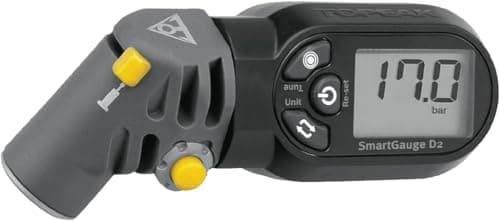
The second invisible cost is pressure. Resistance on a wheel-on trainer depends on how hard the roller is pressed into the tire, which depends on the tire pressure you set — so your “level 4” is only repeatable if your pressure is. The road tire pressure guide covers what to set and why, and a gauge is in the block below.
Not a ranking. A wheel-on trainer under the cap arrives as a frame and a roller. These three are the parts that turn it into a session you will actually repeat, and each is already researched on this site under its own roundup.
The number your trainer cannot give you. A chest strap is the cheapest way to make an unconnected trainer measurable; this one is at the bottom of our heart rate roundup's price range and publishes both ANT+ and Bluetooth.
The pressure that makes resistance repeatable. Roller pressure against the tire is what sets the feel, so the same session at the same gauge reading is the only way two weeks of training compare. Presta and Schrader, reads to 250 psi per the listing.
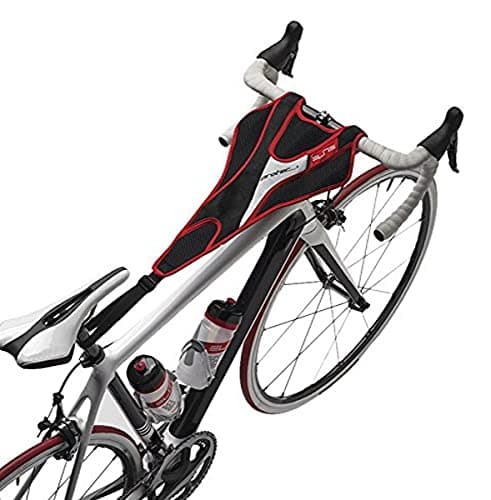
Sweat protection for the frame and stem. Indoor sweat lands on the top tube and the headset with no airflow to dry it, and salt corrodes alloy and steel. This is the cheap insurance for an expensive bike.
We haven’t tested any of these — they’re the parts the job above calls for, listed so you don’t have to go hunting. Prices are live from Amazon and we earn a commission if you buy. Prices as of November 16, 2026. #ad
What this page cannot tell you
We have not ridden, measured or listened to any of these trainers. Four of the seven read their published specifications through this site’s reuse layer from the parent roundup, on the date that page records, so the two pages cannot drift apart. The other three had their listings read on 9 November 2026, the day they were resolved through the Amazon Creators API, and every spec quoted from them is marked with that date.
What nobody publishes is the figure that would settle the category: how loud each unit is in a room with a hard floor, and how accurately any of them reports effort. Treat a sub-cap trainer as a way to turn the pedals in January, not as a measuring instrument.
Decide whether you need a number before you decide anything else.If the answer is yes, there is one unit under this cap that can give you one, and it is the direct drive. If the answer is no — you want to keep your legs turning through the winter and you ride by feel — then the fluid units are the nicer ride and the magnetic ones are the cheaper experiment.
Fluid versus magnetic is the only feel difference you can predict. Fluid resistance builds as the wheel spins faster, so a sprint loads up the way it does outdoors. Magnetic resistance is set in steps and stays where you put it, so speed does not change the load much and the realism comes entirely from your gears. Neither listing type publishes a curve, so this is mechanism rather than measurement.
Check the published wheel range against your bike.Four of the seven listings under the cap publish one — 24-29in, 26-29in and 700C, and two at 26-28in and 700C — and the rest publish nothing. If you ride a gravel bike with 650b wheels or anything unusual, buy from a listing that states the range, and read tire width explained if you are not sure what you are on.
Budget for the two parts most boxes do not include. A wheel-on trainer needs a quick-release skewer it can clamp and a block to level the front wheel. Two of the seven listings under this cap publish both as included; the other five say nothing either way. If yours does not state it, add the parts to the price before you compare.
Then spend the saved money on the room, not the trainer. A fan matters more to a winter of indoor riding than a resistance level does, and so does a mat under the bike if you live above anyone. If you are deciding between a cheap trainer and no trainer, the cheap trainer wins every time; if you are deciding between a cheap trainer and a flagship, read the full roundup before the sales start, and our deals page if the timing is right.