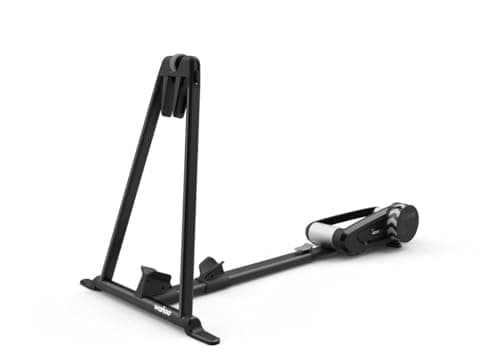
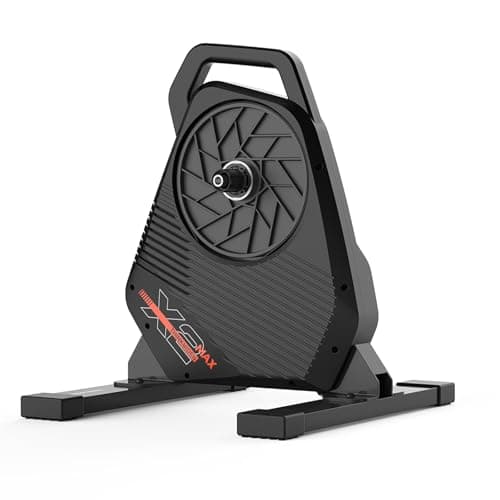
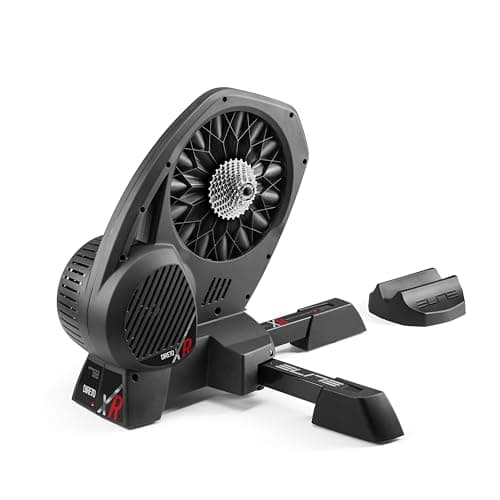
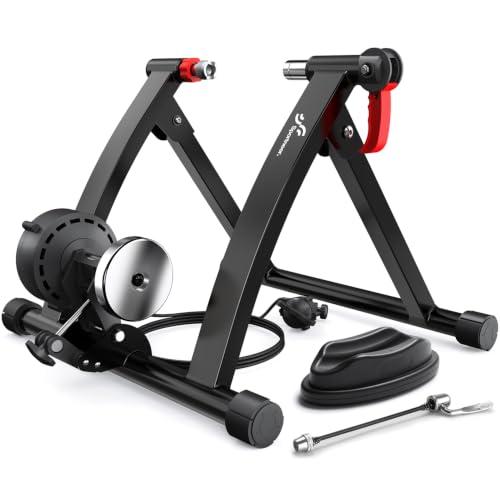
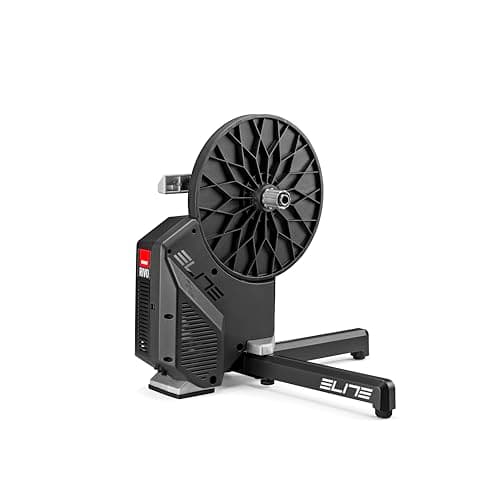
The Elite Rivo is the pick, because it is the closest honest replacement: direct-drive smart resistance, a published power accuracy figure, and the only listing in this catalog that admits the cassette is extra. The no-subscription answer is the Sportneer magnetic stand, which needs no app at all, and the least-faff answer is the Wahoo KICKR ROLLR, which needs no cassette and no wheel removal.
What Peloton is actually good at, and we are not pretending otherwise
Peloton sells one box. A stationary bike, a screen bolted to it, and a subscription library of live and on-demand instructor-led classes, all bought in a single decision and all designed to work together on arrival. What it is genuinely excellent at is the part no trainer on this page addresses at all: making people actually do the session. The instructors, the schedule, the leaderboard and the fact that there is nothing to set up are a motivation system, and for a lot of riders that system is the entire value.
If that is what you are buying, nothing here is a substitute, and you should buy the thing that works. This page is for the other reader — the one who already owns a bike, wants to ride it indoors, and does not want to buy a second bike to do it.
One thing we will not do is print a price or a specification for Peloton. It is not in this catalog, we do not sell it, and this site’s price layer cannot quote it live. The rule that stops us typing a price for a product we do sell applies at least as strongly to one we do not.
The real question: which parts do you still have to buy?
This is the whole page, and it is why a feature table would mislead you. Peloton’s box contains three things. Every alternative here contains one of them — the resistance — and leaves you to source the rest.
The bike. You own it. That is the saving, and it is the largest one on this page by a wide margin.
The cassette.Only if you go direct drive. On a direct-drive trainer the rear wheel comes off and the chain runs on a cassette you fit to the trainer itself. It must match your drivetrain’s speed count. Of the trainer listings in this catalog, exactly one states that the cassette is not included, and it is the top pick on this page. Everything else leaves you to find out. Our cassette roundup covers choosing one, and eleven-speed versus twelve-speed explains the compatibility rule that decides which you need.
The screen and the classes. A phone, tablet or laptop you already own, plus an app. This is where the honest accounting matters: a smart trainer plus a subscription app is still a monthly bill, so if escaping the subscription was the point, the wheel-on units at the bottom of this page are the only complete answer.
A fan and a mat. Nobody mentions these and everybody buys them within a month. There is no airflow indoors, so heat is the limiting factor rather than fitness, and sweat destroys floors and bike finishes.
The three architectures, and what each one costs you
Direct drive. Rear wheel off, chain onto the trainer. Quietest, most road-like, most accurate, and the only architecture where an app can hold you at a target wattage regardless of your gear. Costs you a cassette, a few minutes each session, and the most money.
Roller. The bike clamps at the front and the rear wheel rests on a roller. No cassette, no wheel removal, fast bike swaps. Costs you tire wear and some noise.
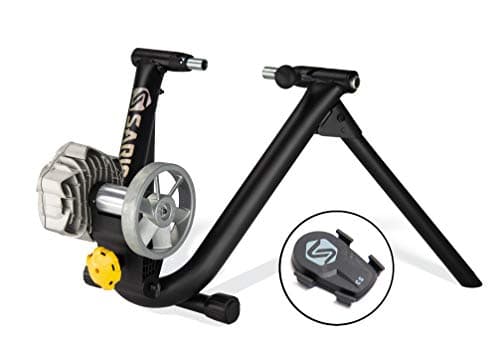
Wheel-on, fluid or magnetic.The rear tire presses against a resistance unit. Cheapest by a long way and the only route that works with no app and no subscription. Costs you app-controlled resistance, power accuracy and quiet — and a rear tire.
The full trainer roundup ranks all fifteen in this catalog on exactly that axis, and the trainers under three hundred dollars is the price band where most of the no-subscription options sit.
If you want the classes without the bike
Worth saying plainly, because it is the gap most of these searches are really about: the class experience is software, and software does not require the hardware it was sold with. Several subscription platforms run on a phone or tablet and will take data from any smart trainer, and some will take data from a speed sensor on a dumb trainer.
We are not going to rank those platforms or quote their prices, because they are not products in this catalog and we have no way to verify either through our own pipeline. What we can tell you is the hardware requirement, which is the part this site is about: to get resistance that changes with the class, you need one of the three smart trainers at the top of this page. To get a number on screen from a dumb trainer, you need a speed sensor — one of the units here includes one. And to get heart rate into any of it, a cheap strap is all it takes; our heart rate monitors under fifty dollars all publish both radios.
What this page cannot tell you
Nobody here has ridden any of these trainers, or a Peloton. There is no power-accuracy comparison, no noise measurement and no ride-feel verdict, because this site measures nothing. Every specification above is read through this site’s reuse layer from the parent roundup, on the date that page records, so the two cannot drift apart.
The figures that would settle this — measured wattage error per unit, decibels at a given speed, how a fluid curve compares with a real road — are published by almost none of these makers, and where a brand does publish one it is in the table below with its name on it. Buy the architecture that matches how much setup you will tolerate, then buy the unit in that architecture that publishes the most.