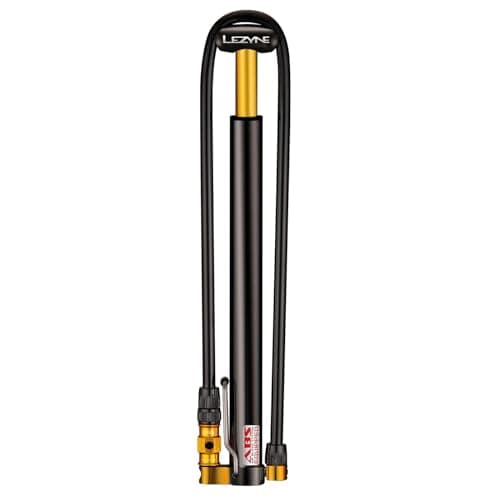
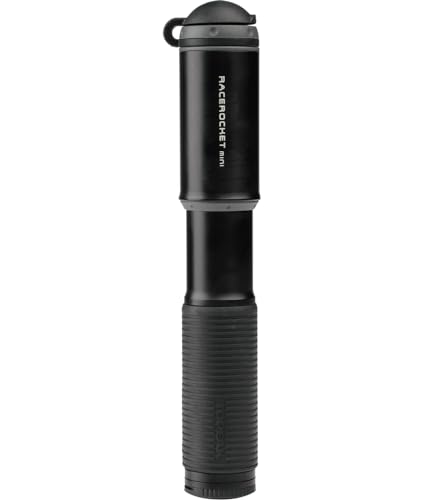
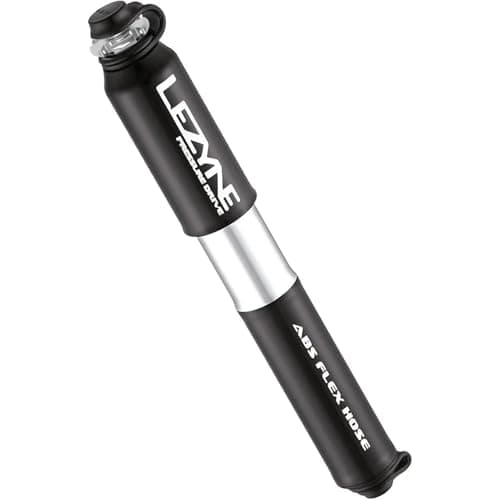
The Lezyne Pressure Drive is the mini pump to buy, because it is the only one in this catalog that publishes a maximum pressure, both valve types and an included frame mount. If your tires are wide rather than narrow, the Micro Floor Drive moves more air per stroke and braces on the ground instead of in your fist. The budget pick is the Topeak Race Rocket— the cheapest way to have a pump on the bike, from the most widely stocked brand in the category, with the honest caveat that its listing publishes nothing whatsoever.
This page exists because the rest of this site keeps telling you to carry one. The floor pump versus mini pump comparison concludes that you need both and that only one of them comes with you; the flat repair guide assumes a pump is in the bag. Until today there was nowhere to send that reader.
Volume or pressure: a mini pump cannot do both
Every hand pump is a trade between the air it moves per stroke and the pressure it can push against. A narrow barrel reaches a high pressure and moves almost nothing; a wide barrel fills a tire quickly and runs out of leverage long before a road pressure.
So the question is your tire, not your budget. A 25 mm road tire at 90 psi wants the high-pressure pump and a lot of patience. A 45 mm gravel tire at 35 psi wants volume, and the mini floor format is the better shape. A fat e-bike tire wants a floor pump and a cup of tea — see the floor pump roundup.
Nobody here publishes a gauge, and one of them says so
Not one mini pump in this catalog has a gauge. That is normal in the category and it has a real consequence: at the roadside you are inflating by feel, and “feels about right” on a road tire is routinely 20 psi under. One listing prints “No Gauge” in its own title, which is the most honest thing any product on this page does.
The practical answer is to pump enough to ride home safely, then set the real pressure at home against a gauge you trust. Our road tire pressure guide and gravel pressure guide both work from the sidewall range, which is the only authority that matters.
The valve question decides whether the pump is useful
One listing here names Presta and Schrader. The other two name neither. If you own a road bike and a kid’s bike, or a road bike and a hybrid, a dual-valve pump is one pump instead of two — Presta versus Schrader covers why the two are not interchangeable and what an adapter does and does not solve.
What this page cannot tell you
Nobody here has pumped a tire with any of these, counted strokes or checked a claimed ceiling against a gauge. Every specification above was read off the live Amazon listing on 22 November 2026. The ranking is a ranking of what those listings are willing to state, and in this category that turns out to separate them sharply.
No maker here publishes the two figures that would settle it: strokes to reach a stated pressure in a stated tire, and the pump’s weight. Treat a claimed psi ceiling as a laboratory maximum reached by someone who was not cold, wet or late.
Not a ranking. A pump on its own does not fix a flat — these are the parts the job actually needs, and the gauge that settles the pressure once you are home.
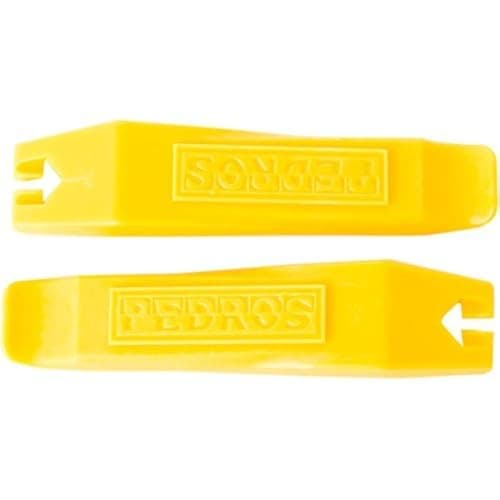
You cannot inflate a tube you have not fitted. Nylon levers so they do not score a rim, and wide enough not to fold on a tight bead.
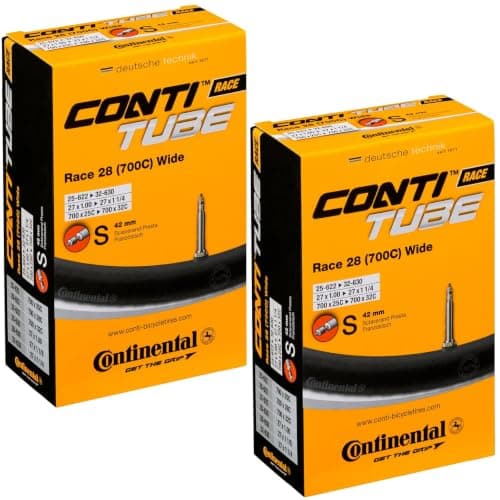
The spare tube the pump is for. A mini pump plus a fresh tube is a ten-minute roadside fix; a patch is a twenty-minute one that needs the tire dry.
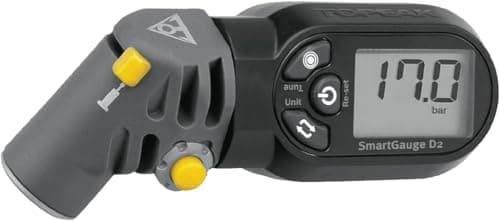
None of the pumps above has a gauge. This is where the real pressure gets set once the ride is over — a digital gauge that reads both valve types.
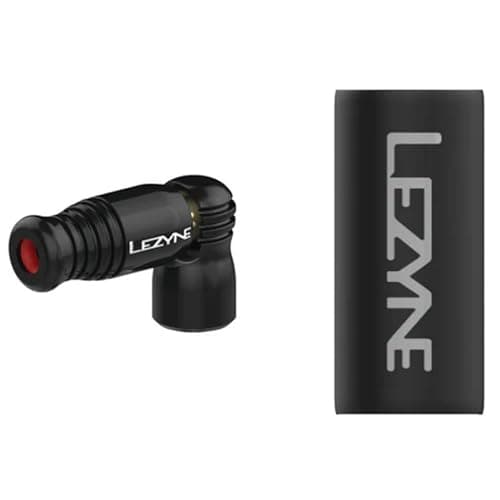
The other way to carry air: a CO2 head gets a tire up in seconds when you have no patience left. It is a complement to a pump, not a replacement — the gas runs out and the pump does not.
No buyable offer right now — the link still shows the current listing.
We haven’t tested any of these — they’re the parts the job above calls for, listed so you don’t have to go hunting. Prices are live from Amazon and we earn a commission if you buy. Prices as of November 23, 2026. #ad
Maximum pressure, valve fit and mount, each as published by the seller in its own listing. Two of the three rows are mostly empty, and that emptiness is the finding rather than an oversight on our part.
Every middle column is a claim the seller publishes in its own listing, not a measurement of ours. Prices are live from Amazon as of November 23, 2026 and 3 of 3 rows carry one right now. Every “Check price” link is an affiliate link and Amazon pays us at no cost to you. #ad
Floor pumps are a different purchase and are ranked separately in
the floor pump roundup, where a gauge and a charge chamber are the axis instead.
Pick the barrel for your tire, not your wallet. Narrow road tires want a high-pressure pump and will punish a volume pump; wide gravel and commuter tires want volume and will make a high-pressure pump feel endless.
Check the valve before you buy, every time. Only one pump here publishes that it fits both Presta and Schrader. If you own more than one kind of bike, that single line in a listing saves you owning two pumps.
Buy the mount with the pump. A pump that lives in a drawer is not a pump. One listing here includes a frame mount; for the others, assume you are buying a bracket or carrying it in a jersey pocket where it will eventually be left behind.
Prefer a hose to a direct fit if your valves are Presta. Levering a pump body against a Presta stem is the most common way to end a ride with a bent valve and a second flat. The mini floor pump here uses a hose; the hand pumps do not publish one.
Set the real pressure at home.No pump on this page has a gauge. Inflate enough to ride, then use a gauge and the range printed on your own sidewall — that number beats any chart, including ours.