Skip to content
ChainringClub

The Best CO2 Inflators

A CO2 head is not a pump. It is a valve between a cartridge at enormous pressure and a tire that wants a fraction of it — so this page ranks on what each listing publishes about controlling that flow, and on the one risk almost none of them mentions.

A bicycle wheel photographed close up, with the valve stem and rim in sharp focus.
By Stephen V.Published November 2, 2026How we research

Heads up: we earn a commission if you buy through the links on this page, at no extra cost to you. It never decides what makes the list — here’s how that works.

Quick picks

Tap any row for the full write-up. Specs are the manufacturer's own published claims, read on 2 November 2026.

#ProductBest forPrice
1
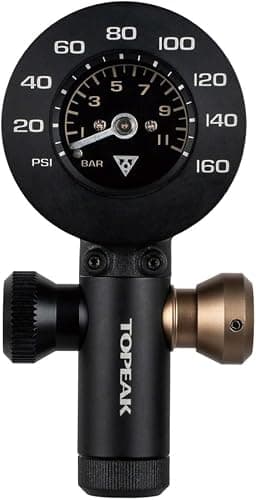
Topeak AirBooster G+ with Gauge

Topeak AirBooster G+ with Gauge

The only inflator in this field whose listing publishes a pressure figure, a weight and a way to read the tire while you fill it — which is the whole problem with CO2, solved in the listing rather than in a review.

Top pick
Anyone who wants to know what pressure they actually put in
2
Silca EOLO IV CO2 Regulator

Silca EOLO IV CO2 Regulator

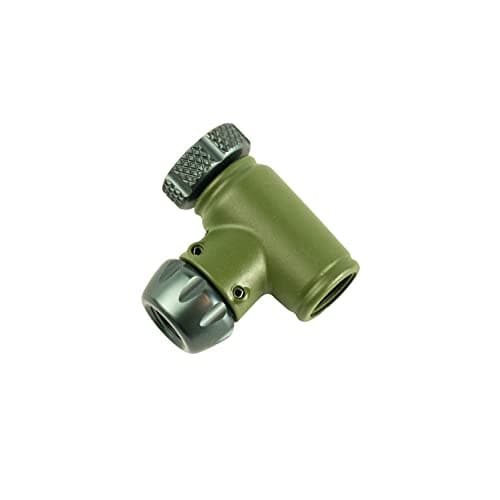
The most controllable head here on published mechanism: a turn-screw valve, both valve types, and any threaded cartridge — which is the specification that matters when the alternative is all-or-nothing.

Riders who want to feed gas in gradually and stop part-way
3
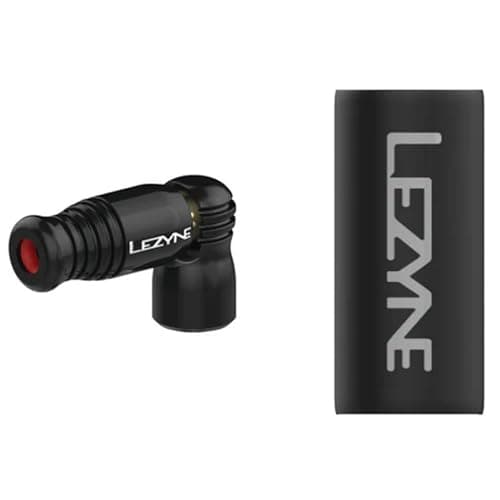
Lezyne Trigger Speed Drive CO2

Lezyne Trigger Speed Drive CO2

A trigger valve in CNC aluminum, and a listing honest enough to put the words "Head Only" in the title so nobody opens the package expecting gas.

Fast, one-handed operation on a Presta bike
4
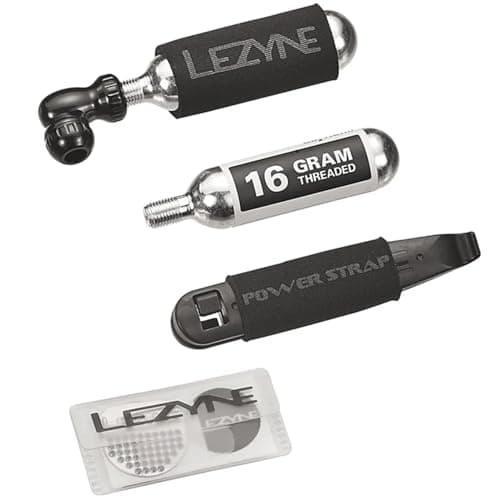
Lezyne Twin Repair Kit

Lezyne Twin Repair Kit

The one product here that solves the whole roadside problem rather than a third of it: inflator, two cartridges, levers and a patch kit, published for both valve types.

The rider who wants to buy a complete flat kit once
5
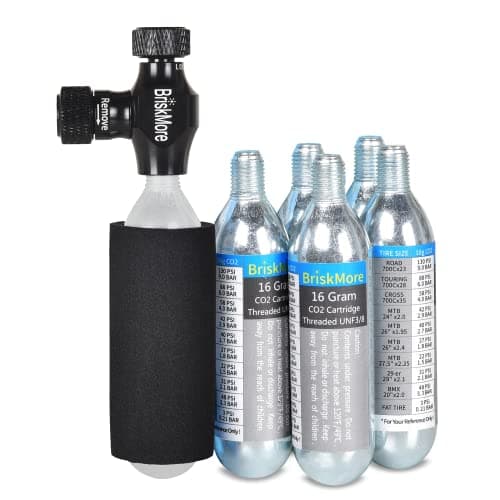
BriskMore CO2 Inflator Kit

BriskMore CO2 Inflator Kit

Five cartridges in the box and the only listing in this roundup that names the insulated sleeve — which is the accessory the category pretends it does not need.

Buying the head and a season of gas in one go
6
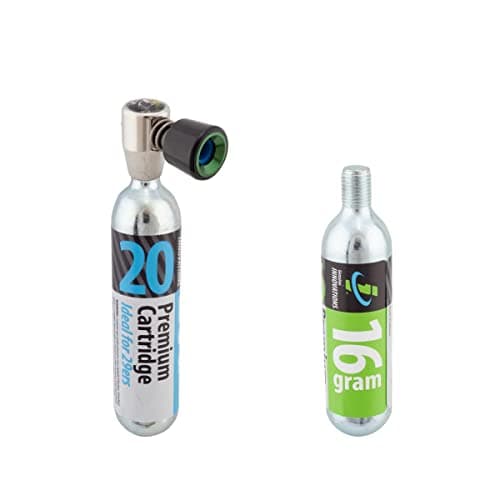
Genuine Innovations AirChuck

Genuine Innovations AirChuck

The lightest published weight in the roundup by a factor of three, from the brand that effectively invented the category — in a listing that publishes the weight and then stops.

Gram counters who already know how CO2 behaves
7
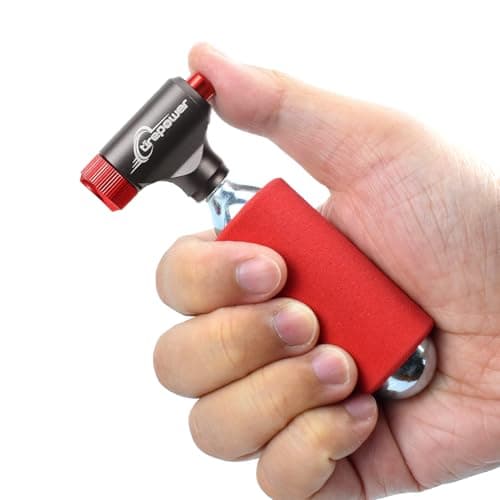
Ctrepower CO2 Bike Tire Inflator

Ctrepower CO2 Bike Tire Inflator

A push-button head that states in its own title that no cartridge is included — the single most useful sentence any listing in this category can contain, and it is on the cheapest product here.

A spare head to leave in a second saddle bag
8
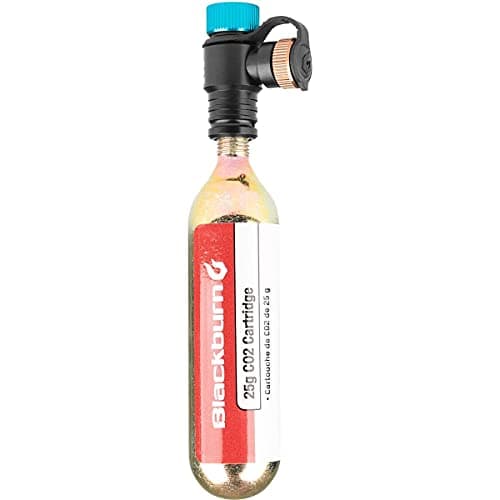
Blackburn Core CO2 Thread-On Inflator

Blackburn Core CO2 Thread-On Inflator

A known brand, a published thread-on fitting, and a listing so short it repeats its own product name to fill the space.

Riders who want a shop-brand head and do not need the spec sheet
Check price on Amazon →

No buyable offer right now — the link still shows the current listing.

9
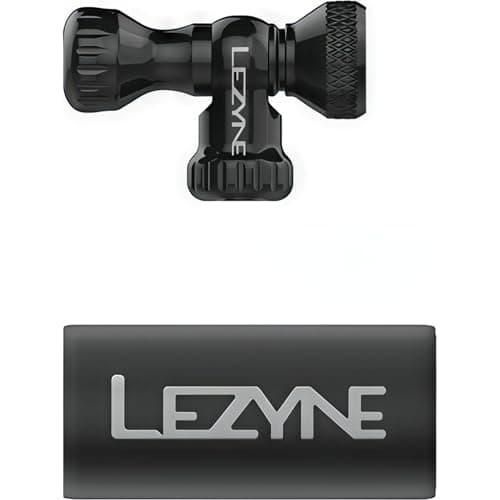
Lezyne Control Drive CO2 Inflator

Lezyne Control Drive CO2 Inflator

Seven words of listing from a brand that publishes a full specification on its other head three positions above — which is what makes the silence here conspicuous rather than excusable.

Riders buying on the brand's reputation rather than the page

You are not buying a pump. You are buying a valve.

A 16 g CO2 cartridge is a sealed steel capsule holding carbon dioxide at a pressure far beyond anything your tire wants. The inflator is the thing in between: it pierces the cartridge, and then it decides how fast the gas leaves. That is the entire product.

Which means the useful question is not “how fast does it fill a tire” — they all fill a tire faster than you can get the levers back in the bag — but how much say do you get over the process. Can you put half the cartridge in, squeeze the tire, and add the rest? Or is it one squeeze and whatever happens, happens?

So this page ranks on what each listing publishes about control. Across these nine products, four publish a control mechanism— a gauge, a turn-screw, a trigger and a push-button. The other five publish nothing you could use to predict how the tool behaves in your hand.

The numbers this category does not publish

We read all nine live listings on 2 November 2026 and counted what was actually stated. The results are the reason this page exists.

One of nine publishes a pressure figure. One. On a category of products whose only job is to put a specific pressure into a tire. The Topeak publishes 160 psi because it has a gauge on it; everything else leaves you squeezing the tire with a thumb and guessing, which is exactly the technique our guide to road tire pressure spends two thousand words explaining is unreliable.

Two of nine publish a weight(16 g and 55 g — a 3.4x spread on an object you carry in a saddle bag for a year and use twice). Four of nine publish which valve they fit, which is remarkable given that half the bikes in an American garage are Schrader and half the road bikes are Presta. And three of nine say anything about whether gas is in the box— two say it is, one says plainly that it is not, and six leave you to find out.

The thing almost nobody mentions: it gets cold enough to hurt

When compressed CO2 expands it absorbs heat, and the metal it expands through gets extremely cold extremely fast. A brass or aluminum head attached to a discharging cartridge drops well below freezing in the second or two it takes to fill a tire. Bare skin held against cold metal sticks to it.

This is not a rumor and it is not a controversy; it is the same physics that makes an aerosol can cold in your hand, scaled up. The remedy is trivial — a neoprene sleeve over the cartridge, or a glove, or holding the head by its plastic rather than its metal.

Exactly one of the nine listings here mentions an insulated sleeve. Eight say nothing. We are not treating that as a product defect in eight cases, because a sleeve costs almost nothing and you can add one; we are treating it as the single most useful piece of information a first-time CO2 buyer is not being given, which is why it is in the second paragraph of this page rather than the eighteenth.

CO2 leaks out faster than air, and that is not a fault

Carbon dioxide passes through butyl rubber faster than the nitrogen and oxygen in air does. The practical consequence is well known to anyone who has used a cartridge: the tire you filled at the roadside on Saturday is noticeably soft by Sunday morning.

That is normal and it is not a sign the repair failed. It does mean a cartridge is a get-home tool rather than a top-up tool, and that the first thing you do when you get home is bleed the tire and refill it properly with a floor pump. If you are choosing between carrying CO2 and carrying a mini pump, our floor pump versus mini pump comparison makes the case for carrying both, and this is the reason.

If you run tubeless, read this before you buy any of them

Stan’s NoTubes — whose sealant is the reference product in the category — publishes a caveat that very few riders have seen: CO2 is best used in an emergency, and Stan’s recommends letting the CO2 out after the ride and replacing it with regular air, because prolonged exposure to CO2 can cause the sealant to separate and can degrade the liquid latex it depends on.

So if you are tubeless, a CO2 head is still the right thing to carry — it is the fastest way to re-seat a bead at the roadside — but it comes with a chore attached. Bleed and refill the same evening. Our guide to fixing a tubeless flat puts that in the repair ladder where it belongs, and the sealant roundup covers what you are protecting.

Threaded or unthreaded: get this right or the head is useless

CO2 cartridges come in two interfaces. Threaded cartridges have a screw thread around the neck; the head screws on, seals, and then pierces. Unthreaded cartridges are plain-necked and need a head that clamps and punctures.

Every head in this roundup that publishes an interface publishes a threadedone — Silca says “universal CO2 threaded cartridge compatible”, Lezyne says “Threaded CO2 Cartridge Compatible”, Blackburn says “Thread-On”, Ctrepower says “Screw-on Nozzle”. That is a quiet consensus and it is good news: threaded is the safer interface, because the seal is made before the seal is broken, and it is what almost every cartridge sold in the United States now uses.

Buy threaded cartridges unless you own an old head that demands otherwise. The sizes are 16 g, 20 g and 25 g: 16 g is the standard and is enough for one road tire; a 25 g is what you want for a wide gravel tire or a fat tire, because volume, not pressure, is what empties a cartridge.

The gas, and the three things that go in the bag with it

Not a ranking. Six of the nine heads above publish nothing about whether a cartridge is included, so assume one is not. These are the consumables the job needs — threaded cartridges in the three common sizes, plus the levers and the tube that have to come out before the gas goes in.

  • Genuine Innovations 16g Threaded Cartridges

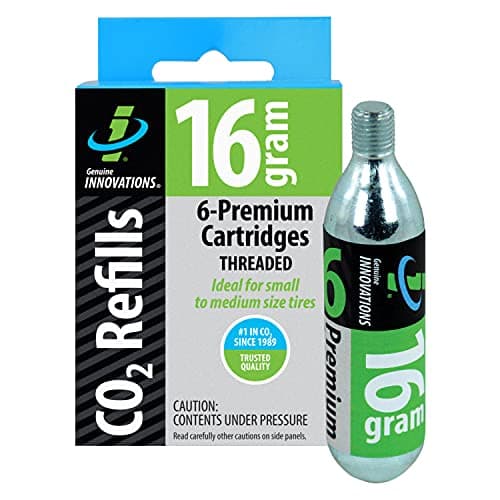
    Genuine Innovations 16g Threaded Cartridges

    The standard size, from the brand that supplies most American bike shops: a six-pack of threaded 16 g cartridges. One 16 g cartridge is roughly a road tire's worth of gas. Buy these if you ride 25 to 32 mm tires and want the cheapest per-fill option.

  • Lezyne Threaded 20g CO2 Cartridges

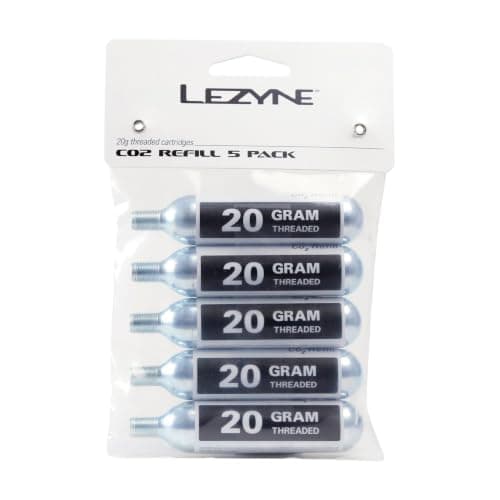
    Lezyne Threaded 20g CO2 Cartridges

    A five-pack of threaded 20 g cartridges, from a listing that also names 16 g and 25 g refill packs. Go up to 20 or 25 g if you ride wide gravel tires or fat tires, where a 16 g cartridge runs out before the tire is up.

  • Pro Bike Tool Threaded CO2 Cartridges

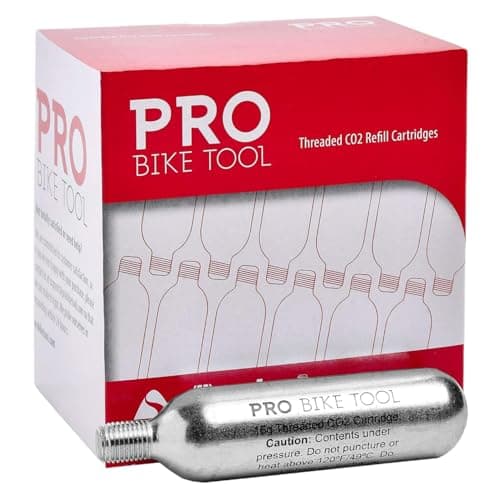
    Pro Bike Tool Threaded CO2 Cartridges

    Threaded cartridges published as fitting most threaded inflator heads, listed for road, MTB, gravel and hybrid. A second source for the same consumable — useful because cartridge stock is the thing that is out of stock when you need it.

  • Pedro's Tire Levers

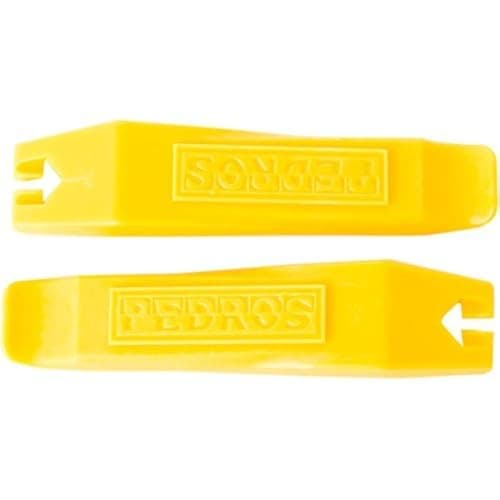
    Pedro's Tire Levers

    You cannot inflate a tube you have not fitted. These are the levers the flat-repair guide uses; nylon so they do not score a rim, and wide enough to not fold on a tight tire bead.

  • Continental Race 28 Inner Tube

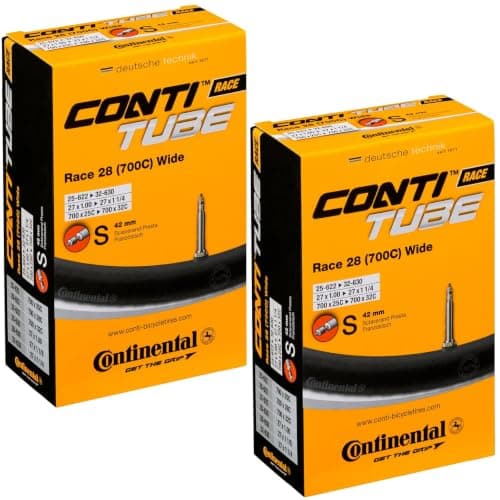
    Continental Race 28 Inner Tube

    The spare tube the cartridge is for. A CO2 head gets you home on a fresh tube in two minutes; a patch at the roadside takes twenty and needs the tire dry.

We haven’t tested any of these — they’re the parts the job above calls for, listed so you don’t have to go hunting. Prices are live from Amazon and we earn a commission if you buy. Prices as of November 16, 2026. #ad

How many cartridges should you carry?

Two, if you have room. One is a single point of failure in a tool category with no second chance — a cartridge that vents because the head went on crooked is gone, and so is your ride home. Riders who carry CO2 and nothing else have had this happen to them, which is the entire argument for also owning a mini pump.

If your saddle bag only takes one, carry one 25 g rather than one 16 g on anything wider than a road tire. And whatever you carry, check it twice a year: a cartridge that has been pierced even slightly bleeds down over months in a bag, and the first you will know about it is at the roadside. Our list of what to carry on a bike ride puts the cartridge, the head and the tube together as a single unit for exactly this reason.

What this page will not tell you

It will not tell you how many seconds any of these takes to fill a tire, because no listing publishes a figure and we have not timed one. It will not tell you how many psi a 16 g cartridge puts into a 700x28 tire, because that depends on the tire volume, the rim, the temperature and how much gas you lose seating the head — and any single number we printed would be wrong for most readers.

It will not rank these on build quality, because “CNC Aluminum Construction” and “Aluminum Alloy Construction” are the only two material claims published across nine products and neither comes with a grade. And it will not tell you which one feels best in the hand, because feeling things in the hand is testing, and we do not do that here.

What it tells you is what nine sellers chose to state about their own products, counted and compared. On that test the ranking is not close: one listing publishes a pressure, a weight and a gauge, and eight do not.

What nine CO2 listings publish, and what they leave out

Read from the live Amazon listing for each linked ASIN on 2 November 2026. A dash is a listing that does not say — not a no. Cartridge sizes are 16 g, 20 g and 25 g.

InflatorControl as publishedValves publishedCartridge interfaceGas in the boxWeight / pressure
Topeak AirBooster G+Gauge, 360° readoutPresta——55 g · 160 psi
Silca EOLO IVTurn-screw control valvePresta + SchraderThreaded (universal)——
Lezyne Trigger Speed DriveTrigger valve operationPresta (slip fit)ThreadedNo — “Head Only”—
Lezyne Twin Repair Kit—Presta + SchraderThreadedYes — 2 cartridges—
BriskMore CO2 Inflator Kit—Presta + Schrader—Yes — 5 × 16 g—
Genuine Innovations AirChuck————16 g · —
Ctrepower CO2 InflatorPush-buttonSchrader + PrestaScrew-on nozzleNo — stated in title—
Blackburn Core CO2——Thread-on——
Lezyne Control Drive—————

Four of nine publish a control mechanism. Four publish a valve type. Four publish a cartridge interface. Three say whether gas is included. Two publish a weight. One publishes a pressure. And one — BriskMore — is the only listing of the nine that mentions an insulated sleeve, which is the part that keeps the cold off your hand.

The picks, in detail

1

Topeak AirBooster G+ with Gauge

Top pick
Topeak AirBooster G+ with Gauge
$69.79 · View on Amazon

Price as of November 16, 2026. #ad

Best for: Anyone who wants to know what pressure they actually put in

The only inflator in this field whose listing publishes a pressure figure, a weight and a way to read the tire while you fill it — which is the whole problem with CO2, solved in the listing rather than in a review.

  • Listing: CO2 Inflator with Gauge, 160 psi
  • Listing: Presta
  • Listing: 55 g
  • Listing: Inflate and Check Pressure in One Tool
  • Listing: 360-Degree Rotating Readout, Pocket-Size

Good

  • A gauge is the single most useful thing on a CO2 head, because a cartridge gives you one shot and no feedback. Every other product on this page asks you to judge pressure by squeezing the tire with your thumb
  • 160 psi is the only pressure figure published anywhere in this roundup — on a category whose entire function is pressure
  • 55 g is published, which makes it one of only two heads here you can budget for in a saddle bag before you buy it
  • A 360-degree rotating readout means the dial faces you whatever angle the valve ends up at, which is a genuinely thought-through detail on a tool you use while crouched in a hedge

Less good

  • The listing publishes Presta and does not mention Schrader. If you ride a bike with Schrader valves, assume it is not for you until the seller says otherwise
  • The most expensive head on this page by a wide margin, and the gauge is the only reason
  • 55 g is more than triple the lightest published weight here, which is the cost of carrying a dial
  • No cartridge is published as included, and no insulated sleeve is mentioned

Skip it if: Your bike runs Schrader valves, or you count grams. This is the heaviest head here with the narrowest published valve compatibility.

2

Silca EOLO IV CO2 Regulator

Silca EOLO IV CO2 Regulator
$26.99 · View on Amazon

Price as of November 16, 2026. #ad

Best for: Riders who want to feed gas in gradually and stop part-way

The most controllable head here on published mechanism: a turn-screw valve, both valve types, and any threaded cartridge — which is the specification that matters when the alternative is all-or-nothing.

  • Listing: CO2 Regulator Head, Compact Turn-Screw Design
  • Listing: turn-screw control valve
  • Listing: presta and schrader compatible
  • Listing: universal CO2 threaded cartridge compatible
  • Listing: Green & Grey

Good

  • A turn-screw is the most metered control type published in this roundup. It lets you add gas, stop, check the tire with your hand and add more — which is the only way to land near a target pressure without a gauge
  • Published compatibility with both Presta and Schrader, so it fits whatever bike is in the garage
  • "Universal threaded cartridge compatible" is published, which matters because threaded cartridges are the common denominator and the cheap ones are easy to find
  • Calling itself a regulator rather than an inflator is an accurate description of what the product does, which is rarer here than it should be

Less good

  • No weight published, so you cannot compare it against the two heads that do publish one
  • No pressure figure, no fill-time claim and no gauge — you are still judging pressure by feel, just more gradually
  • No cartridge included per the listing, and nothing published about an insulated sleeve
  • A turn-screw is slower to operate than a trigger, which is a real cost when it is raining and your hands are cold

Skip it if: You want one squeeze and a full tire. The mechanism that makes this precise is the mechanism that makes it slow.

3

Lezyne Trigger Speed Drive CO2

Lezyne Trigger Speed Drive CO2
$19.99 · View on Amazon

Price as of November 16, 2026. #ad

Best for: Fast, one-handed operation on a Presta bike

A trigger valve in CNC aluminum, and a listing honest enough to put the words "Head Only" in the title so nobody opens the package expecting gas.

  • Listing: Trigger Speed Drive CO2 Bike Tire Inflator Head Only
  • Listing: CNC Aluminum Construction
  • Listing: Trigger Valve Operation
  • Listing: Presta Slip Fit Head
  • Listing: Threaded CO2 Cartridge Compatible

Good

  • A trigger is the fastest published control type here and the easiest to work one-handed, which is what you want when the other hand is holding the wheel
  • "Head Only" in the title is the kind of honesty this category mostly lacks — three listings here say nothing at all about whether gas is included
  • CNC aluminum is a published material rather than an adjective, and on a part that gets very cold it means the head will not craze like plastic
  • Threaded cartridge compatibility is published, so refills are the easy-to-source kind

Less good

  • "Presta Slip Fit" is the published fit and Schrader is not mentioned. Treat it as a Presta tool
  • A slip fit is a press-on seal: it is quick, and it is the fit most likely to hiss if you hold it crooked
  • No weight, no pressure figure, no gauge, no sleeve published
  • Head only means you are buying cartridges separately — see the Essentials block below

Skip it if: You ride Schrader, or you want the head and the gas in one purchase.

4

Lezyne Twin Repair Kit

Lezyne Twin Repair Kit
$24.99 · View on Amazon

Price as of November 16, 2026. #ad

Best for: The rider who wants to buy a complete flat kit once

The one product here that solves the whole roadside problem rather than a third of it: inflator, two cartridges, levers and a patch kit, published for both valve types.

  • Listing: Twin Repair Kit Bike CO2 Repair Kit
  • Listing: Twin Speed Inflator
  • Listing: 2 Threaded Cartridges
  • Listing: Power Levers
  • Listing: Presta & Schrader Compatible

Good

  • Two threaded cartridges are published as included, which is two more than six of the nine heads on this page
  • Levers and a repair kit in the same package means the saddle bag is finished in one purchase instead of four
  • Published Presta and Schrader compatibility, so it does not care which bike it ends up on
  • A "Smart Kit" package that lives in a saddle bag is far more likely to actually be with you than a loose head rolling around a jersey pocket

Less good

  • Nothing published about how the inflator meters the flow — "Twin Speed" is a model name, not a control mechanism
  • No weight published, and a kit is inherently bulkier than a bare head
  • No sleeve mentioned, and a kit aimed at beginners is exactly where a cold-burn warning would matter most
  • You will replace the cartridges at the first flat and then you are buying gas anyway

Skip it if: You already own levers and patches. You are paying for a bag of things you have.

5

BriskMore CO2 Inflator Kit

BriskMore CO2 Inflator Kit
$23.99 · View on Amazon

Price as of November 16, 2026. #ad

Best for: Buying the head and a season of gas in one go

Five cartridges in the box and the only listing in this roundup that names the insulated sleeve — which is the accessory the category pretends it does not need.

  • Listing: CO2 Inflator Kits with 5 X 16g CO2 Cartridges
  • Listing: Presta and Schrader Valve Compatible
  • Listing: Included Insulated Sleeve
  • Listing: Bike Tire Pump for Mountain and Road Bicycles
  • Listing: for Bike Tires

Good

  • Five 16 g cartridges published as included is the largest quantity of gas in this roundup, and cartridges are a consumable you will buy anyway
  • The insulated sleeve is published, and exactly one other product on this page mentions anything of the kind — which is to say, none
  • Presta and Schrader compatibility is published, so it is valve-agnostic out of the box
  • 16 g is the standard size, which keeps the refills cheap and findable in any bike shop

Less good

  • Nothing published about how the flow is controlled — no trigger, no turn-screw, no button named anywhere in the listing
  • No weight, no pressure figure, no material published
  • "Bike Tire Pump" in the title is a search phrase rather than a description; this is not a pump and cannot top a tire up next week
  • A no-name head holding back 850-ish psi is the one place in this category where a brand with a service history is worth something

Skip it if: You want to know how the thing works before you buy it. This listing tells you what is in the box and almost nothing about the tool.

6

Genuine Innovations AirChuck

Genuine Innovations AirChuck
$17.77 · View on Amazon

Price as of November 16, 2026. #ad

Best for: Gram counters who already know how CO2 behaves

The lightest published weight in the roundup by a factor of three, from the brand that effectively invented the category — in a listing that publishes the weight and then stops.

  • Listing: AirChuck, Lightweight, Bicycle CO2 Inflator
  • Listing: weight 16g
  • Listing: Black
  • Listing: G2673
  • Listing publishes no valve type, control mechanism or cartridge

Good

  • 16 g published is the lightest head here and one of only two published weights — it is lighter than the cartridge it screws onto
  • Genuine Innovations is the name behind most of the threaded cartridges sold in American bike shops, so cartridge fit is the one thing you do not need to worry about
  • A head this small genuinely disappears into a saddle bag, which is the difference between a tool you own and a tool you carry
  • The simplest possible mechanism has the fewest things that can fail in the cold

Less good

  • No valve compatibility published at all, which is a strange omission on a product whose only interface is a valve
  • No control mechanism published, so assume it is closer to all-or-nothing than to metered
  • No cartridge included per the listing, and no sleeve mentioned
  • Small and light means small and cold: less metal between the gas and your fingers, not more

Skip it if: This is your first CO2 inflator. Buy one that publishes how it meters the flow and learn on that.

7

Ctrepower CO2 Bike Tire Inflator

Ctrepower CO2 Bike Tire Inflator
$15.99 · View on Amazon

Price as of November 16, 2026. #ad

Best for: A spare head to leave in a second saddle bag

A push-button head that states in its own title that no cartridge is included — the single most useful sentence any listing in this category can contain, and it is on the cheapest product here.

  • Listing: CO2 Bike Tire Inflator with Screw-on Nozzle
  • Listing: CO2 Bike Pump with Push-Button
  • Listing: Schrader & Presta Compatible
  • Listing: Aluminum Alloy Construction
  • Listing: No CO2 Cartridge is Included

Good

  • "No CO2 Cartridge is Included" published in the title is the most honest line in this entire roundup, and it costs the seller sales to say it
  • Push-button operation is published, which puts it in the minority of four heads here that name a control mechanism at all
  • Published Schrader and Presta compatibility on the cheapest product in the field
  • Aluminum alloy is a published material on a part that will be at sub-zero temperatures within a second of being used

Less good

  • A push-button is the least metered of the three control types published here — easier to dump the whole cartridge than with a turn-screw
  • A screw-on nozzle means a threaded cartridge only; unthreaded ones will not work
  • No weight, no pressure figure, no sleeve published
  • No brand history to fall back on if the seal goes

Skip it if: This is the only inflator you will own. Buy the one with the gauge or the one with the turn-screw and keep this as the spare.

8

Blackburn Core CO2 Thread-On Inflator

Blackburn Core CO2 Thread-On Inflator
Check price on Amazon →

No buyable offer right now — the link still shows the current listing.

Best for: Riders who want a shop-brand head and do not need the spec sheet

A known brand, a published thread-on fitting, and a listing so short it repeats its own product name to fill the space.

  • Listing: Core CO2 Thread-On Bike Inflator
  • Listing: Thread-On
  • Listing publishes no valve type
  • Listing publishes no weight or control mechanism
  • Listing publishes no cartridge or sleeve

Good

  • "Thread-On" is published, which tells you the cartridge interface unambiguously — more than five of the nine listings here manage
  • Blackburn has sold bike pumps for decades and its products turn up in actual bike shops, so warranty and spares are a real thing rather than a hope
  • A thread-on fitting is the more secure of the two cartridge interfaces: it seals before it pierces, rather than relying on you holding it straight
  • Simple enough that there is very little to go wrong

Less good

  • The listing's second half is a verbatim repeat of its first half. There is no specification here at all
  • No published valve compatibility, which on a Presta/Schrader split is the one thing a buyer needs
  • No control mechanism named, so there is no way to tell from the listing whether it meters or dumps
  • No weight, no pressure, no included gas, no sleeve

Skip it if: You are choosing between products on what they publish. On that test this one is near the bottom, and the brand is doing all the work.

9

Lezyne Control Drive CO2 Inflator

Lezyne Control Drive CO2 Inflator
$29.49 · View on Amazon

Price as of November 16, 2026. #ad

Best for: Riders buying on the brand's reputation rather than the page

Seven words of listing from a brand that publishes a full specification on its other head three positions above — which is what makes the silence here conspicuous rather than excusable.

  • Listing: Control Drive CO2 Bike Tire Inflator
  • Listing publishes no valve type
  • Listing publishes no control mechanism
  • Listing publishes no weight or material
  • Listing publishes no cartridge or sleeve

Good

  • Lezyne's CNC pumps and heads have a long service record and the brand stocks spares, which is worth something on a tool with an O-ring in it
  • The name "Control Drive" implies a controlled valve, and Lezyne's sibling head on this page publishes exactly that — but implication is not publication
  • Threaded cartridges are the Lezyne standard across its range, so refills are easy to match
  • Compact enough for a saddle bag, on the evidence of the product photograph if not the text

Less good

  • Seven words. This is the least informative listing in the roundup and it is not the cheapest product in it
  • No published valve compatibility, no weight, no material, no mechanism
  • Everything a buyer would want to know about this head has to come from somewhere other than the page selling it
  • Nothing published about the cold, which is true of eight of nine here

Skip it if: You want the specification before the money. Lezyne publishes one on the Trigger Speed Drive; buy that one instead.

What actually decides this purchase

Decide whether you want a gauge before anything else. It is the only published difference on this page that changes the outcome of the job, and exactly one product here has one. Everything else is a mechanism for guessing more carefully.

Check the valve.Four of nine listings publish a valve type and two of those are Presta-only. If your bike runs Schrader — most hybrids, most kids’ bikes, many e-bikes — buy from the four that say both.

Buy threaded cartridges. Every head here that publishes an interface publishes a threaded one. 16 g for road, 20 or 25 g for gravel and fat tires, because it is air volume rather than pressure that empties a cartridge.

Assume gas is not included. Six of nine listings do not say. Two include gas, one says plainly that it does not, and buying a head that arrives without a cartridge is the single most common disappointment in this category.

Buy or improvise a sleeve. A discharging cartridge gets cold enough to injure bare skin, and one listing in nine mentions it. A neoprene sleeve, a glove or a folded rag all work.

Carry a pump as well if you can. CO2 is one shot per cartridge and leaks down within a day. A mini pump is slower, heavier and infinite.

If you are tubeless, plan to bleed it the same evening.Stan’s publishes that prolonged CO2 exposure can separate sealant and degrade latex. Use the gas to get home, then swap it for air.

Common questions

How many psi does a 16g CO2 cartridge give you?

It depends entirely on the volume of your tire, and none of the nine listings in this roundup publishes a figure. The general shape of it: a 16 g cartridge is sized around a road tire, a wide gravel or fat tire needs 20 or 25 g, and how much you actually get depends on how much gas escapes while you seat the head. The honest answer is that you should buy the inflator with a gauge, or carry a second cartridge, or do both. Anyone quoting you an exact psi is quoting it for a tire that is not yours.

Are CO2 inflators better than a mini pump?

They are faster and they are finite. A cartridge fills a tire in seconds and then it is gone; a mini pump takes two hundred strokes and works forever. Most riders who have had a second flat on the same ride end up carrying both. Our pump comparison sets out the trade-off in detail, and the pump roundup ranks the pumps themselves.

Why does my tire go soft a day after using CO2?

Because carbon dioxide passes through butyl rubber faster than air does. That is normal behavior, not a failed repair and not a leaking tube. Treat a cartridge as a get-home tool: when you are back, let the CO2 out and refill the tire with a floor pump. If you run tubeless, Stan’s publishes a stronger version of the same advice — prolonged CO2 exposure can separate sealant and degrade the latex in it.

Threaded or non-threaded CO2 cartridges — which do I need?

Threaded, almost certainly. Every head in this roundup that publishes a cartridge interface publishes a threaded one, in four different phrasings: “universal CO2 threaded cartridge compatible”, “Threaded CO2 Cartridge Compatible”, “Thread-On” and “Screw-on Nozzle”. Threaded is also the safer interface, because the head seals against the neck before it pierces the seal.

Can a CO2 inflator give you frostbite?

Expanding CO2 absorbs heat, so the cartridge and the metal head get very cold very quickly — cold enough that bare skin can stick to the metal. Use the insulated sleeve if one came with your inflator (exactly one of the nine listings here publishes that it includes one), or a glove, or hold the head by its plastic body. It is a known property of the product rather than a defect in any particular one, and it is the thing this category most consistently declines to mention.

Can you use CO2 on tubeless tires?

Yes, and it is the fastest way to re-seat a bead at the roadside, which is exactly when you need it. But Stan’s recommends letting the CO2 out after the ride and replacing it with regular air, because prolonged CO2 exposure can cause the sealant to separate and can degrade the liquid latex. The tubeless repair ladder puts the step in its place.

Can I fly with CO2 cartridges?

Not reliably, and this is one to check with your airline rather than with us. Compressed-gas cartridges are restricted on aircraft and the rules differ by carrier and by country. Cartridges are cheap and sold everywhere, so the practical answer when you travel with a bike is to pack the head — which is just machined metal — and buy gas at the other end.

Sources

  • Live Amazon listings for all nine inflators and the three cartridge packs, read 2 November 2026 — the source for every “Listing:” specification above, including Topeak's “AirBooster G+ CO2 Inflator with Gauge, 160 psi, Presta, 55 g | Inflate and Check Pressure in One Tool | 360-Degree Rotating Readout | Pocket-Size”, SILCA's “EOLO IV CO2 Regulator Head, Compact Turn-Screw Design - Green & Grey | Compact design, turn-screw control valve, presta and schrader compatible, universal Co2 threaded cartridge compatible”, LEZYNE's “Trigger Speed Drive CO2 Bike Tire Inflator Head Only | CNC Aluminum Construction, Trigger Valve Operation, Presta Slip Fit Head, Threaded CO2 Cartridge Compatible, Gloss Black”, LEZYNE's “Twin Repair Kit Bike CO2 Repair Kit | Twin Speed Inflator, 2 Threaded Cartridges, Power Levers, Smart Kit, Presta & Schrader Compatible”, BriskMore's “CO2 Inflator Kits with 5 X 16g CO2 Cartridges for Bike Tires, Presta and Schrader Valve Compatible, Bike Tire Pump for Mountain and Road Bicycles, Included Insulated Sleeve”, Genuine Innovations' “G2673, AirChuck, Lightweight, Bicycle CO2 Inflator, weight 16g, Black”, Ctrepower's “CO2 Bike Tire Inflator with Screw-on Nozzle - CO2 Bike Pump with Push-Button - Schrader & Presta Compatible - Aluminum Alloy Construction, No CO2 Cartridge is Included”, the complete “Blackburn Core CO2 Thread-On Bike Inflator | Core CO2 Thread-On Inflator” and the complete “LEZYNE Control Drive CO2 Bike Tire Inflator” — retrieved 2026-11-02
  • Stan's NoTubes sealant support center — CO2 is best used in an emergency; Stan's recommends letting the CO2 out after the ride and replacing it with regular air, because prolonged CO2 exposure can separate the sealant and degrade liquid latex — retrieved 2026-11-02
  • Not used: no fill-time test, no psi-per-cartridge figure, no laboratory temperature measurement and no manufacturer safety datasheet is cited on this page. The cold-hazard discussion describes the behavior of expanding compressed gas in general terms and attaches no number to it, because none of the nine listings publishes one and none was measured here — retrieved 2026-11-02
  • Google Autocomplete, 2 November 2026 — `best co2 inflator` returns `…for road bike`, `…mtb`, `…for bike`, `…for gravel bike`, `…head`, `…with gauge`, `…for tubeless` — retrieved 2026-11-02

We haven’t ridden or tested any of the products on this page, and we don’t pretend otherwise. Read how we research — or tell us we’re wrong and we’ll log the correction.