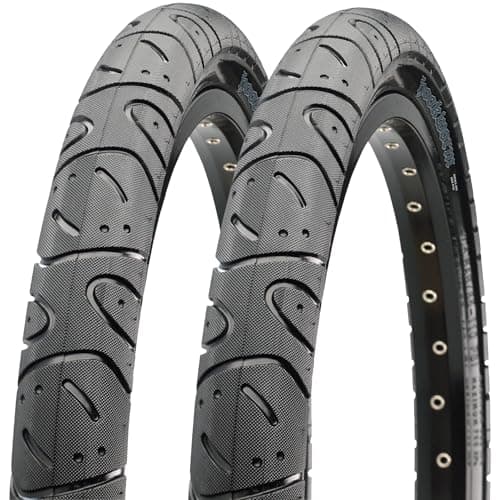
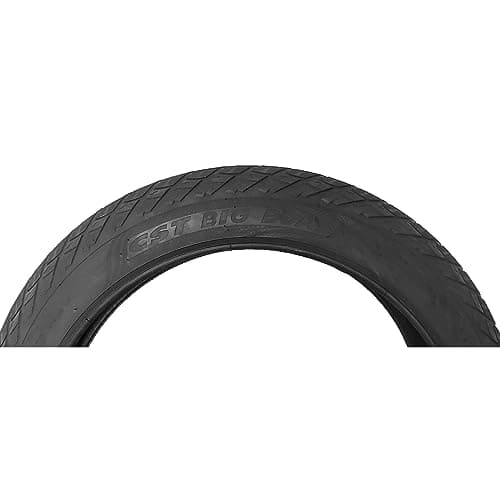
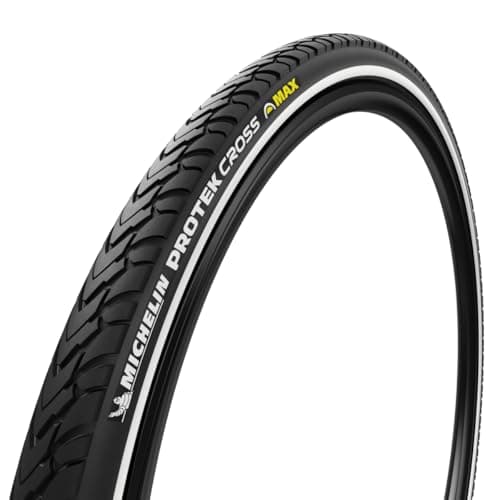
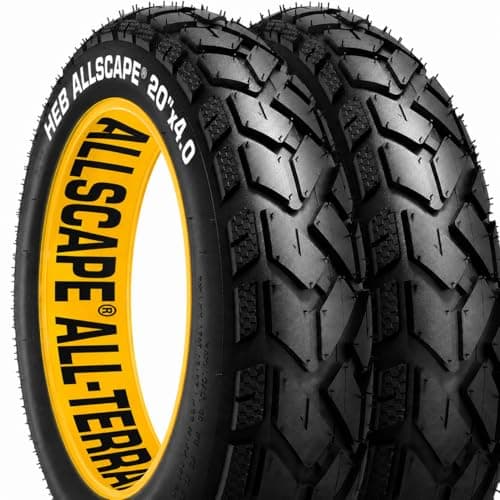
An e-bike tire is a different load case, and there is a mark for it
A road bike with a rider on it is maybe 190 lb and tops out at 25 mph downhill. A fat e-bike with a rider and a rack is closer to 300 lb, puts its power down through the rear tire, hauls that weight to a stop through disc brakes, and in class 3 form holds 28 mph on the flat all day. Those are different jobs for the same piece of rubber.
Two manufacturers mark tires for it. The symbol is E50, and retailer and distributor listings for Schwalbe tires describe it as the ECE-R75 test mark — the United Nations tire regulation originally written for mopeds — indicating the tire is approved for use up to 50 km/h, which is about 31 mph. A lower E25 mark exists for tires approved to 25 km/h.
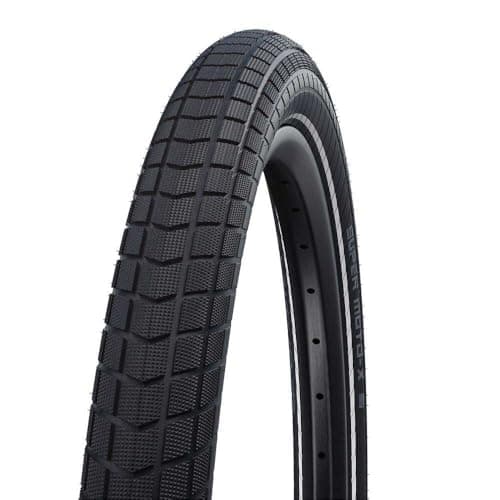
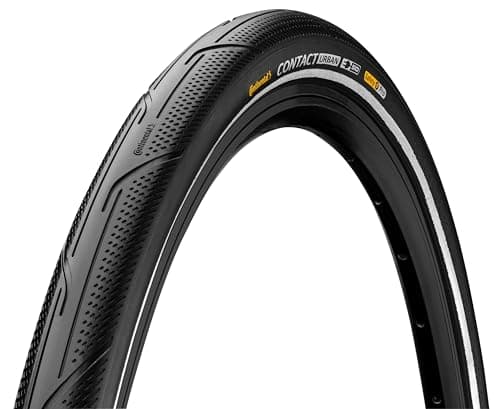
Three of the twelve tires in this roundup publish an E50 mark.Two are Continental and one is Schwalbe. The other nine — including five tires with the word “ebike” or “electric bike” in their titles — publish no speed approval of any kind.
That is not a safety verdict on the other nine. Plenty of unmarked tires are perfectly sound on a class 1 or class 2 e-bike, which is most of them — see our guide to e-bike classes. It is a statement about what you can verify before you spend the money, which on this site is the thing being ranked.
One tire in twelve publishes a load limit
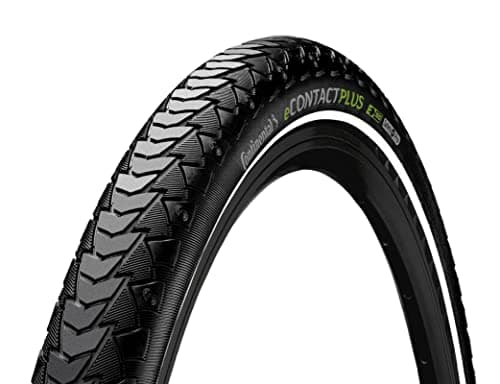
If the speed mark is the headline, the load figure is the one that bites. A tire has to carry the bike, the battery, the rider and whatever is on the rack. The Continental eContact Plus publishes “Carries up to 128 kg”. That is roughly 282 lb, it is a real number, and it is the only load figure published by any listing on this page.
Eleven listings publish nothing about load. Five of those eleven are fat tires sold explicitly for e-bikes — the heaviest bikes in the category. This is the same pattern this site has now found three times: on folding e-bikes, one of nine listings published a bike weight; on storage racks, six of twelve published a capacity and no bike published a weight to match it against. Now the tire carrying the whole thing publishes a limit once in twelve.
Get the size right or nothing else matters
Tires are the one product category where a wrong purchase is a total loss, and this field spans four incompatible size families. There is no “close enough”.
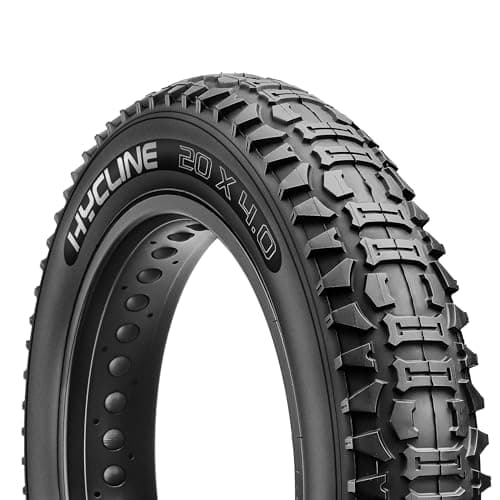
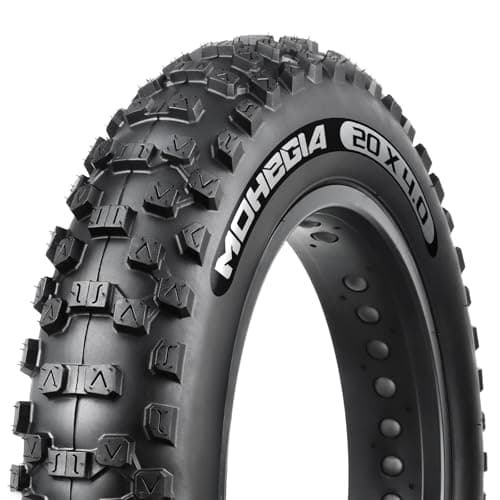
20 x 4.0is the size the search data puts first, because it is what folding fat e-bikes and a large share of budget fat e-bikes run. Three tires here are 20x4 and all three are from Amazon-native brands — neither Schwalbe nor Continental nor Maxxis offers one in this roundup, which is a real gap in the premium end of the market.
26 x 4.0 is the full-size fat standard, the size on most non-folding fat e-bikes. Two tires here fit it, and one of those is the only tubeless-ready tire on the page.
27.5 x 2.0 to 2.5 is where the mid-weight urban and SUV-style e-bikes live, and where two of the three E50-rated tires sit. 700c (29-inch) is the commuter and hybrid wheel, covered here by two 700x35 tires.
Read your current tire’s sidewall before you buy anything. It is printed there, usually in both inch and ISO form — and our tire width guide explains how the two notations relate. One listing in this roundup publishes its size only as a diameter in centimeters, which is not a size you can order from.
The puncture layer: two tires name it, one calls it “tech”
Punctures are the main reason anyone replaces an e-bike tire early, and they matter more on an e-bike than on a road bike for an unglamorous reason: the wheel is heavy, the bike is heavy, and changing a rear tire on a hub-motor e-bike at the roadside is a job most riders cannot do.
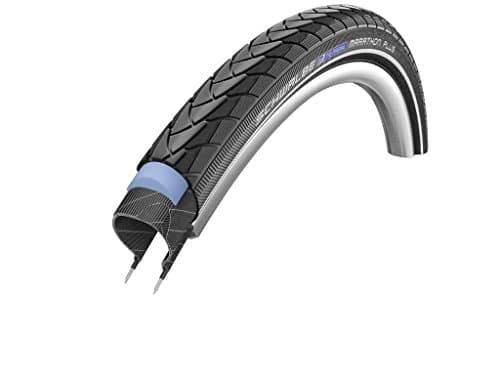
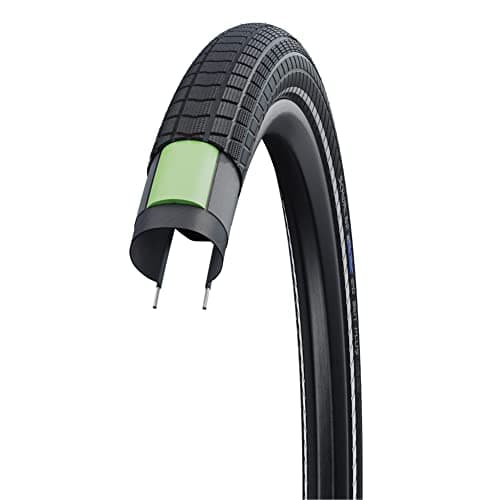
Across twelve listings, the protection claims are: SmartGuard (Schwalbe), GreenGuard and DB Defense (Schwalbe), SafetyPlus Pro Breaker and SafetyPro Breaker (Continental), Bead-to-Bead Tread (Maxxis), “Anti-Puncture Tech” (Michelin), and “heavy duty puncture resistant” (one Amazon-native brand). Four listings publish nothing at all.
The named ones are checkable: each is a specific layer in a manufacturer’s own published hierarchy, so you can compare one Schwalbe against another Schwalbe. The unnamed ones are not. None of the twelve publishes a thickness, a material or a test result, and this page will not tell you which resists punctures best, because nobody published a figure and nothing was measured here.
Casing, bead and the two numbers almost nobody prints
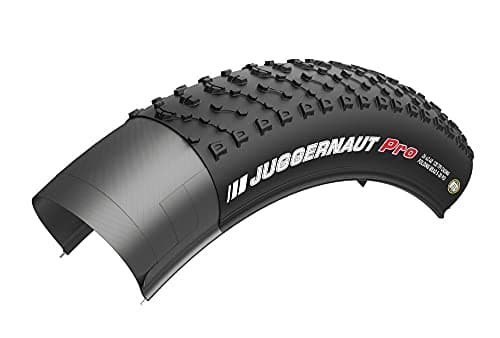
TPI — threads per inch in the casing — is published by two of twelve listings: 120 TPI on the Kenda Juggernaut and 67 TPI on the Schwalbe Marathon Plus. Higher TPI generally means a more supple casing; lower TPI generally means a tougher, heavier one. Two data points do not make a ranking, which is exactly why TPI is not the axis of this page.
Bead type is published more often and matters more than people expect. A folding bead uses Kevlar and rolls up; a wirebead does not. Four tires here publish folding, four publish wire, four publish neither. On a fat tire, folding is the difference between a spare you can carry and one you cannot — and a 20x4 spare is a genuinely large object.
Weight is published by zero of twelve. On a product where half a pound per wheel is a real difference to how a bike accelerates and brakes, not one listing in this roundup states one.
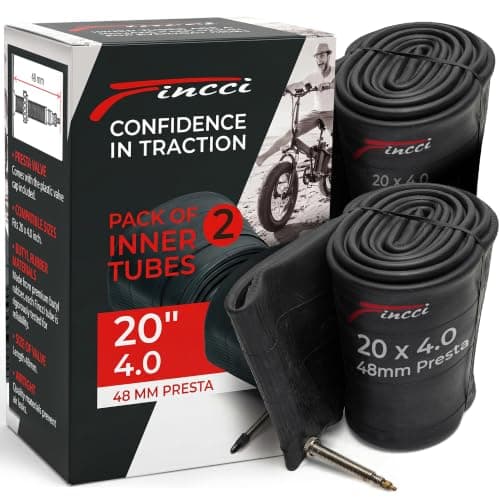
Not a ranking. Eleven of the twelve tires above are tubed, which means a tube goes in with the tire — and a 20x4 fat tube is a different object from a road tube. These are the parts the job needs: the tube in the most common fat size, the levers, and the pump that actually gets a high-volume tire up.
A two-pack of 20 x 4.0 butyl tubes with a 48 mm Presta valve, published for fat-tire electric bikes and 20-inch wheels. The right tube for the three 20x4 tires above — and buy two, because you are changing both or you will be back here in a month.
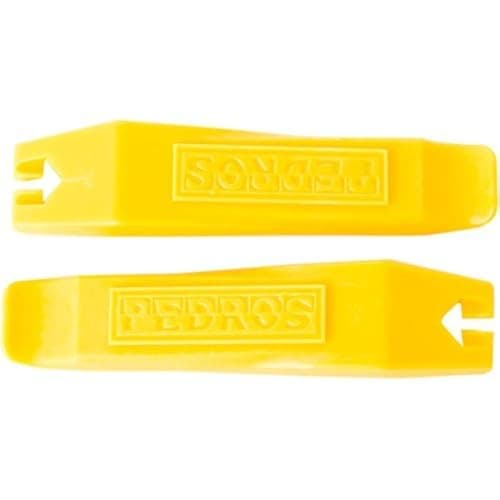
A fat tire bead is stiff and the rim is wide. Nylon levers so you do not score the rim, and wide enough in the blade not to fold when the bead fights back.
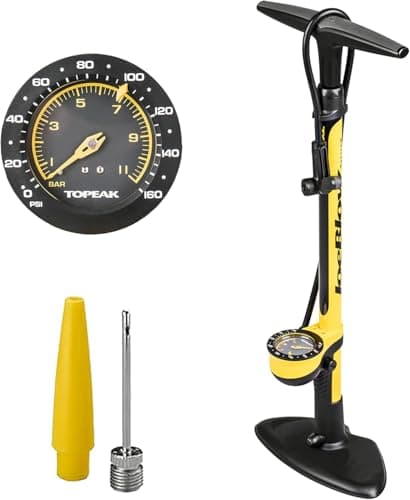
A floor pump with a gauge, which is what a high-volume tire actually needs. Fat tires run very low pressures where a couple of psi changes the ride completely, so the gauge is the point — and a CO2 cartridge will not fill a 4-inch tire.
We haven’t tested any of these — they’re the parts the job above calls for, listed so you don’t have to go hunting. Prices are live from Amazon and we earn a commission if you buy. Prices as of November 16, 2026. #ad
Pressure matters more on a fat tire than on any other bike
A 700x25 road tire at 80 psi and the same tire at 85 psi feel broadly similar. A 20x4 fat tire at 10 psi and the same tire at 15 psi are two different vehicles — one floats and squirms, the other is harsh and skates. The usable range on a fat tire is only a few psi wide, which makes a gauge non-optional.
Our e-bike tire pressure guide covers the numbers and why the figure on the sidewall is a maximum rather than a recommendation. The short version for anyone buying a tire today: check pressure weekly, because an underinflated fat tire on a heavy bike is the single most common cause of the pinch flat the flat repair you are about to do.
And a note that follows directly from the size: a 16 g CO2 cartridge is sized around a road tire. It will not fill a 4-inch fat tire, and it will struggle with a 2.5-inch one. If you carry a CO2 inflator on a fat e-bike, carry 25 g cartridges and expect to use more than one.
When to replace, and why e-bikes get there faster
E-bike tires wear out sooner than the same tire on an unassisted bike, for three reasons that have nothing to do with tire quality: the bike is heavier, the motor applies torque through the rear contact patch continuously rather than in pedal strokes, and riders cover more miles because the assistance makes it easy.
The replacement signs are the same ones on any bike — a flattened center strip, visible casing threads, repeated punctures in the same region, cracking in the sidewall rubber. Our guide to when to replace bike tires sets out the checks. The one e-bike-specific rule worth adding: replace the rear first and more often. On a hub-motor bike the rear tire is doing the driving as well as carrying the larger share of the weight, and the two tires will not wear at the same rate.
What this page will not tell you
It will not rank these on rolling resistance, because one listing claims “Low Rolling Resistance” and another claims “Light Rolling” and neither publishes a watt figure or a test protocol. It will not rank them on puncture resistance, because the strongest published claim is a brand’s own layer name and no thickness or test result appears anywhere.
It will not tell you how many miles any of them lasts, because no listing publishes a mileage and nothing here was ridden. And it will not tell you that the nine tires without an E50 mark are unsafe on your bike — most e-bikes in the US are class 1 and class 2, nowhere near the speeds that mark exists for.
What it tells you is which listings let you check the tire against your bike before the money leaves: three publish a speed approval, one publishes a load, two publish a casing density, and twelve publish a size — one of them in centimeters.