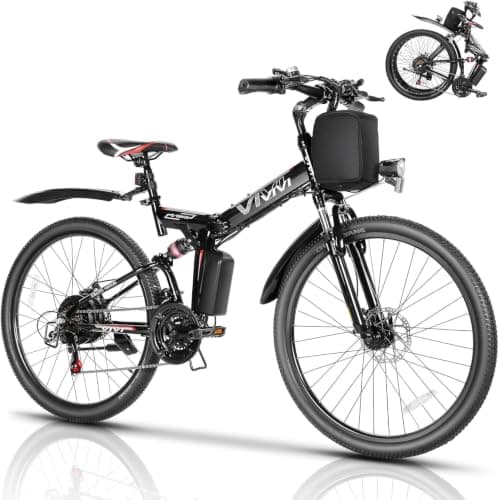
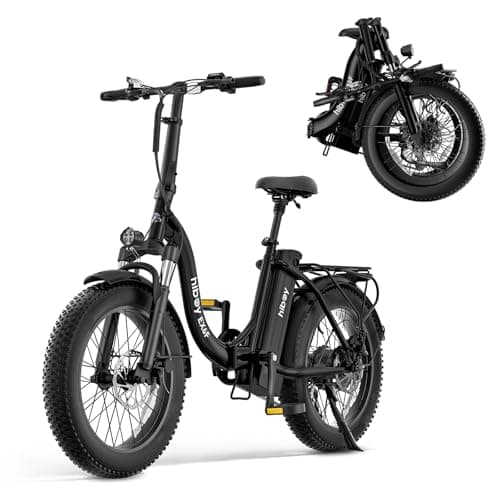
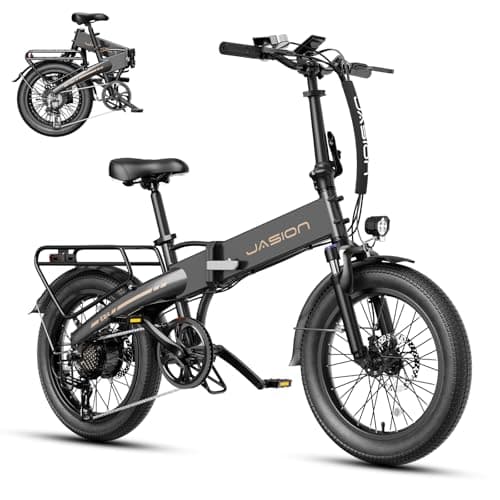
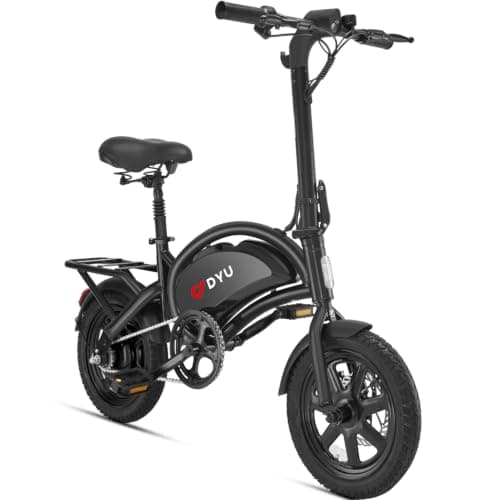
The number this entire category is about, and nobody publishes it
A folding e-bike is not bought for how it rides. It is bought because of a space: a car trunk, a hall closet, a desk at the office, the luggage rack on a train, a boat locker. The buying question is always the same one — how big is it folded?
Zero of the nine listings on this page publish a folded dimension. Not a length, not a height, not a width. Nine products whose entire reason for existing is the size of a folded object, and not one of them states it where you buy it.
So this page ranks on the two published numbers that stand in for it. Wheel size is the main driver of folded footprint — a 14-inch wheel folds into something very different from a 26-inch one, whatever the hinge does. Weight is the other half, because a bike that fits in the trunk and cannot be lifted into it has not solved anything. One of the nine publishes a weight.
45 pounds, and the eight bikes that do not say
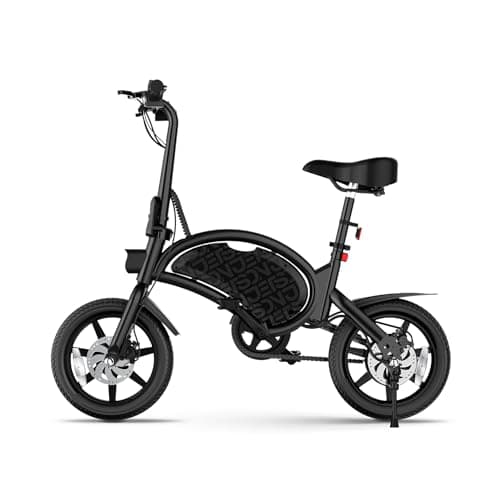
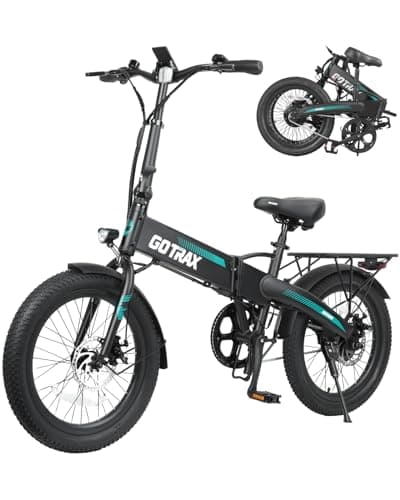
Gotrax publishes “Weighs Only 45lbs” in its title. That is the only weight figure on this page, and it is why that bike is ranked first here despite having the lowest motor wattage in the field.
This is not a new finding on this site. The hills roundup established that e-bike listings do not publish weights, and the car rack page had to tell readers to go and weigh the bike themselves, because a rack publishes a per-bike capacity and the bike publishes nothing to check it against. A folding e-bike makes that gap personal rather than theoretical: you are the rack.
For context without inventing figures: a non-electric folding bike is typically in the mid-twenties of pounds, and every e-bike on this page is heavier than that, because a battery and a hub motor are heavy objects. The one published figure here — 45 lb on a 350 W, 20-inch bike with no suspension and no fat tires — is at the light end of what this category contains. A full-suspension fat-tire folder is a substantially heavier object than that, and none of them will tell you by how much.
Watts: peak, rated, and the one listing that says which
This site has documented the e-bike wattage problem repeatedly, and this field is a clean sample of it. Two listings publish an explicitly peakfigure (1500 W and 1400 W). Three publish a watt number with no label at all (350 W, 500 W, 350 W). Three publish no motor figure of any kind. And exactly one — Vivi — publishes “500W (Rated Motor)”, which is the figure that actually describes what the motor does continuously.
The distinction is not pedantry, because there is a legal line sitting right in the middle of it. The federal definition of a low-speed electric bicycle in 15 U.S.C. § 2085 turns on a motor of less than 750 W. A listing that publishes only a peak figure above that line, and never publishes the rating, leaves the buyer to work out what they have bought. Our motor power page covers the whole problem, and the class system page covers what changes at each state-level tier.
Batteries: two units, one of which makes you do arithmetic
Two listings here publish the battery in watt-hours— 374 Wh and 624 Wh — which is the unit that compares directly across bikes. Two publish volts and amp-hours, which multiply out: 48 V × 15 Ah is 720 Wh, and 36 V × 7.8 Ah is about 281 Wh. Four publish a voltage alone, which tells you nothing about capacity. One publishes nothing at all.
That spread — roughly 281 Wh at one end and 720 Wh at the other — is a factor of two and a half in the thing that determines range, and it is invisible unless you convert the units yourself. Our battery and range explainer does that conversion properly and explains why a watt-hour figure still does not give you a mileage.
One folding-specific consequence: whether the battery comes out matters more on this kind of bike than on any other. A removable pack means you carry the heavy part separately and charge it at a desk; a built-in pack means the bike goes to the outlet. Two of these listings state the battery is removable, one states explicitly that it is built in, and the other six do not say. The charging and storage guide assumes you can separate the two, which is a real limitation on an integrated bike.
UL 2849: compliant, certified, and silence
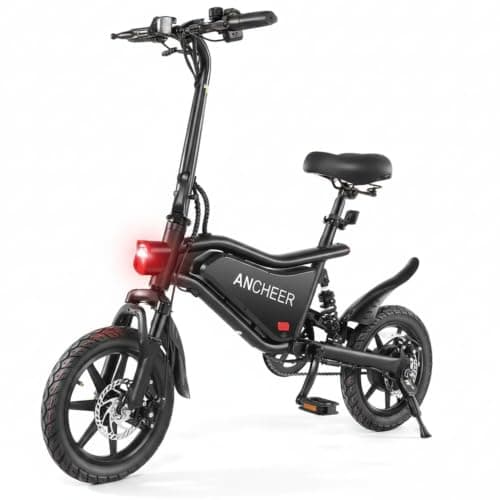
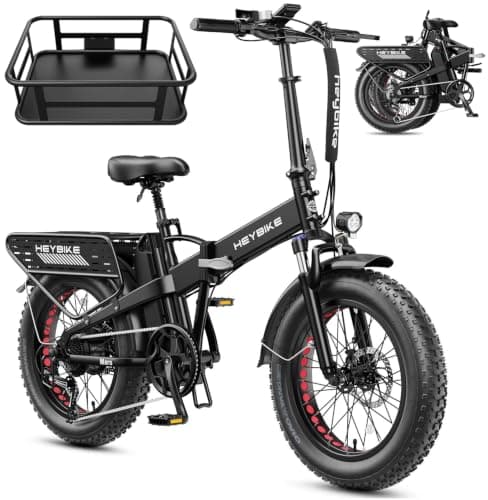
Two of these nine listings name a safety standard, and they do not use the same word. ANCHEER’s says “UL2849 Compliant”. Heybike’s says “UL2849 Certified”.
Those are different claims. Compliantis a statement that the product was built to meet the standard — a claim by the seller about its own design. Certified implies a third party tested and listed it. Neither listing names a certification body or a file number, so neither can be verified from the listing, and this page quotes the words each seller chose rather than treating them as equivalent.
Seven of nine name no standard at all, which is the state of the category rather than a specific criticism. UL 2849 covers the electrical system of a complete e-bike — charger, battery and controller together — and it is the single most consequential thing on an e-bike listing, because the failure mode it addresses is a fire in a hallway. This site has made the same point on conversion kits versus complete bikes, where the certification argument is the main case for buying whole.
Not a ranking. A folding e-bike gets parked in more places than any other bike, carries more value per pound than any other bike, and runs tires nobody checks. These three are already researched on this site under their own roundups.
The lock, and a folding one for a folding bike. A folder gets locked at places a bike normally is not — a station rack, a railing outside a cafe — and a folding lock packs into the same small space the bike does. Our lock roundup ranks the whole category on published shackle dimensions.
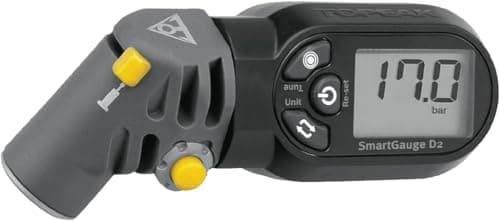
The pressure. Small and fat tires are the two kinds that go wrong fastest: a 14-inch tire has very little air in it to begin with, and a 20 x 4 fat tire runs at pressures a floor pump gauge cannot read accurately. This gauge is Presta and Schrader and reads to 250 psi.
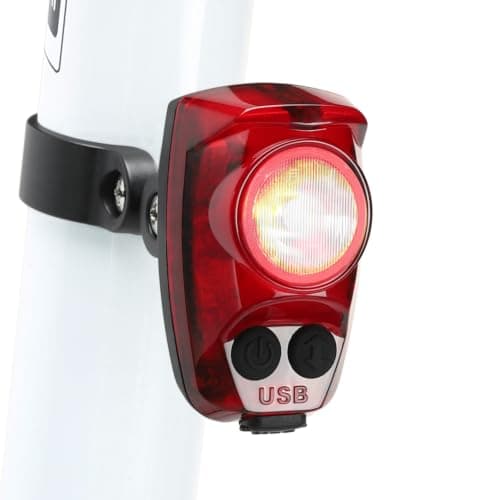
The rear light. A folding e-bike is an urban vehicle used in traffic, often at commuting hours in the dark half of the year, and most of these listings publish a headlight and nothing facing backward. Our lights roundup ranks on published lumens and run time.
We haven’t tested any of these — they’re the parts the job above calls for, listed so you don’t have to go hunting. Prices are live from Amazon and we earn a commission if you buy. Prices as of October 19, 2026. #ad
Where a folding e-bike actually makes sense, and where it does not
It makes sense when a bike has to combine with something else: a train, a bus rack, a car trunk, a cramped apartment, a shared office. It is also the only e-bike format you can bring indoors at the far end of the trip, which quietly solves the theft problem that our lock roundupexists because of — a bike under your desk cannot be stolen from the street.
It makes less sense if the bike lives in a garage and rides from the house. You are paying for a hinge you will not use, accepting smaller wheels than you need, and taking on an extra failure point in the middle of the frame. Our commuter roundup covers the non-folding options, and the main e-bike roundup covers the category as a whole.
One case sits between them. If the reason you want a folder is to put the bike in a car, check the alternative first: a hitch rack carries a full-size e-bike without any of the compromises on this page, and how to transport an e-bike covers the weight problem that decides between those two answers.
What folds, and what that costs you
Almost every bike here uses the same mechanism: a hinge in the middle of the main frame tube, a second hinge in the stem so the bars drop, and folding pedals. That means two structural joints carrying rider weight and motor torque in a place a normal frame has none.
The practical consequences, none of which any listing mentions: a folding frame is heavier than a rigid one of the same strength, the hinge clamps need checking as a maintenance item rather than being fit-and-forget, and small wheels transmit more road shock through that frame than large ones. The two bikes here with suspension are not offering a luxury; they are addressing a consequence of their own wheel size.
None of this makes a folding e-bike a bad buy. It makes it a bike that trades ride quality and weight for a dimension nobody publishes, which is a defensible trade for the right trip and a poor one for the wrong trip.
What we could not check
Nothing on this page has been ridden, folded, weighed or measured. Every “Listing:” specification above is the live Amazon listing text for the exact ASIN linked, read on 19 October 2026, except the Heybike Mars, whose specifications are read through this site’s own reuse layer from the main e-bike roundup that first researched it, on the date that page records.
No manufacturer page is cited. The only external citation on this page is the United States Code definition of a low-speed electric bicycle, which is quoted because two listings here publish a peak wattage above the figure in it and neither publishes a rating that would resolve the question. The folded dimensions, the weights of eight of these nine bikes, and the certification files behind both safety claims are all unavailable from the listings, and this page says so rather than estimating any of them.