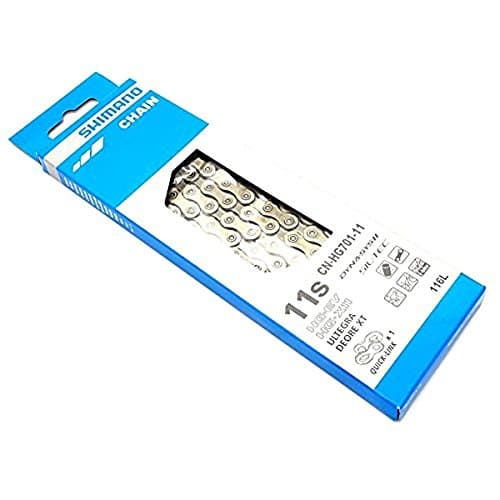
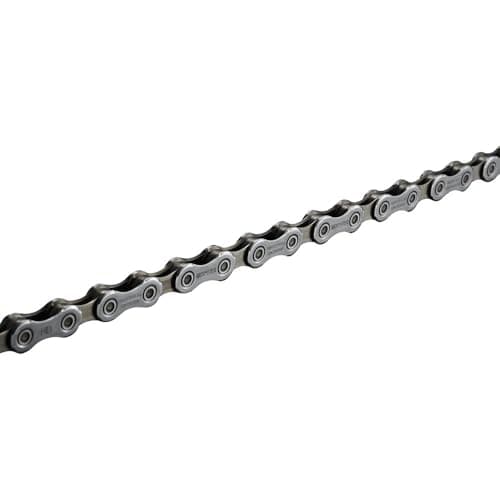
On a Shimano 11-speed drivetrain, buy the Shimano CN-HG601 — it publishes more about itself than anything else here, including the exact quick link in the box and three bike types it works with. But the question in the search box is usually the other one, so here is that answer plainly: a KMC chain is not a compromise on a Shimano drivetrain, and KMC is the only one of the two brands that says so in writing.
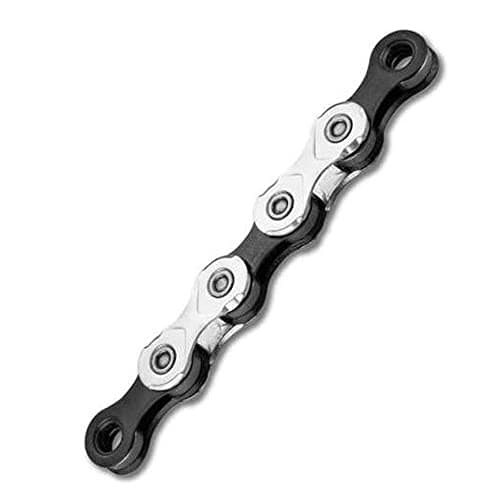
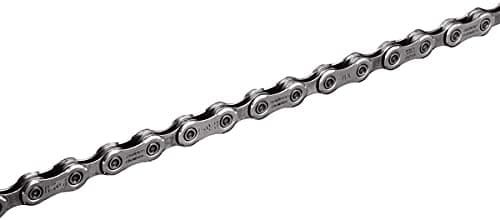
That asymmetry is the whole comparison. KMC’s listings and published specs name Shimano, Campagnolo and SRAM. Neither Shimano listing on this site names a competitor’s drivetrain at all — not to endorse it and not to exclude it. The brand that has to earn your trust is the brand that prints the claim; the incumbent prints weight figures and plate treatments instead and lets the badge do the rest.
The number that decides it before brand does
Link count. Every chain on this page publishes one except the Shimano CN-HG701, and the figures run from 114 (SRAM’s PC-1110, included on the roundup for exactly this contrast) through 118 (KMC X11) to 126 (both 12-speed chains and the Shimano CN-HG601).
A twelve-link spread is not a rounding difference. A chain needs to be long enough to wrap the largest sprocket on your cassette with the chain on the large chainring; too short and the derailleur cage is pulled to its limit or the chain simply will not go on. You can always remove links. You cannot add them without buying a second chain. So on a wide-range cassette or a long-chainstay bike, 126 is the safe number and 114 is a gamble — and that is true whichever badge is on the box. Our chain sizing guide covers the measurement properly.
Speed count is the hard wall; brand is not
The one genuine incompatibility in this category is speed count. An 11-speed chain is wider than a 12-speed chain, and running the wrong one produces exactly the symptoms our skipping guidedescribes. Within a speed count, 11-speed chains from Shimano, KMC and SRAM all work on each other’s drivetrains — and the useful detail is that only KMC commits to that in published text.
The exception worth naming: SRAM’s 12-speed road groupsets use a proprietary Flattop chain with a different profile, so “12-speed” alone is not sufficient there. Our 11-speed versus 12-speed comparison covers why the drivetrain generation matters more than the brand on the chain, and Shimano versus SRAM covers the groupset decision this sits inside.
The quick link, which is the other half of the query
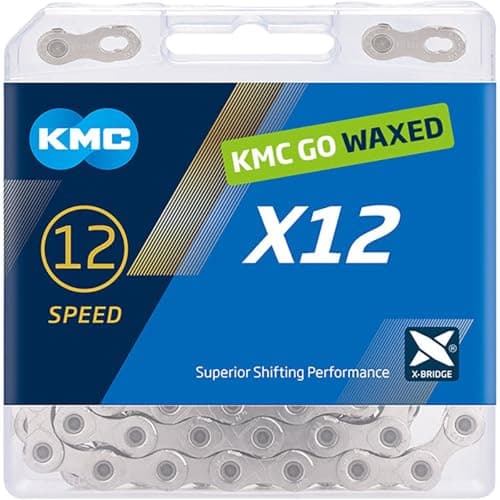
“kmc vs shimano quick link” is its own autocomplete completion, and the published facts are: every Shimano chain here includes a quick link, the CN-HG601 names it (SM-CN900-11), and the KMC X12 names its own (Missing Link). The KMC X11 listing says “Packaging May Vary” and does not name a connector in its title.
What we are not going to do is repeat the widely circulated claim about how many times each brand’s connector may be reused, because neither listing publishes a reuse count and we could not retrieve a manufacturer page that does. If reusing the connector matters to you, the tool that does the job regardless is on our chain tool roundup, which includes KMC’s own Missing Link pliers.
So which brand?
If your drivetrain is Shimano and your speed count is 11, the Shimano chain is marginally the better purchase and the reason is information, not performance: more of its specification is published, at the same tier of the market. If your drivetrain is Campagnolo or SRAM 11-speed, or you simply want the compatibility claim in writing before you spend the money, KMC is the chain whose maker has committed to the answer. If you intend to run wax, the KMC X12 Wax is the only chain on this page that starts you there.
And the thing that will actually decide how long your chain lasts is not on this page at all. It is measuring it before it wears your cassette and keeping it clean. A badly maintained premium chain is a worse purchase than a well maintained cheap one, in either brand.