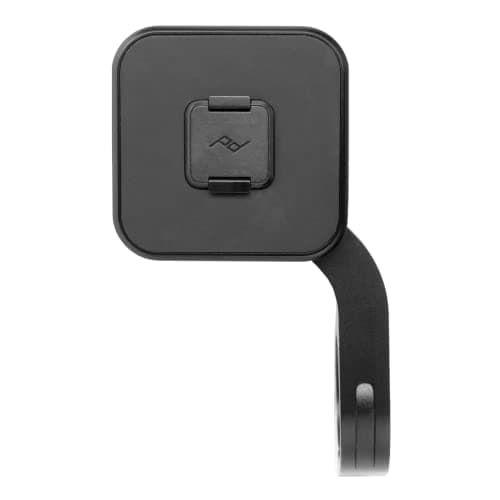
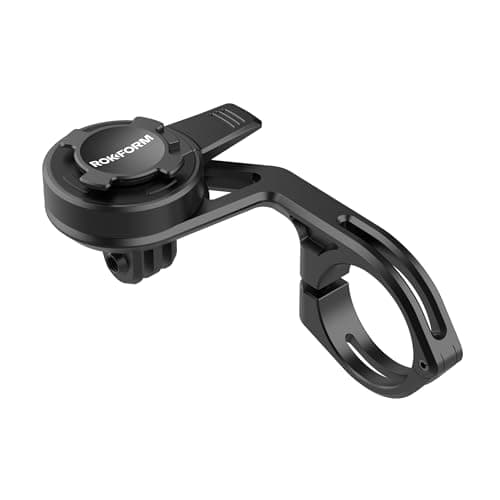
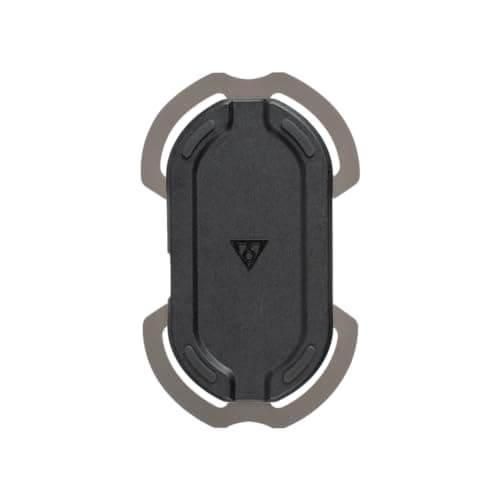
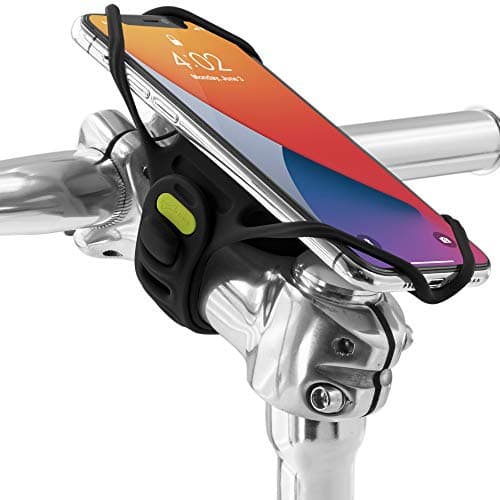
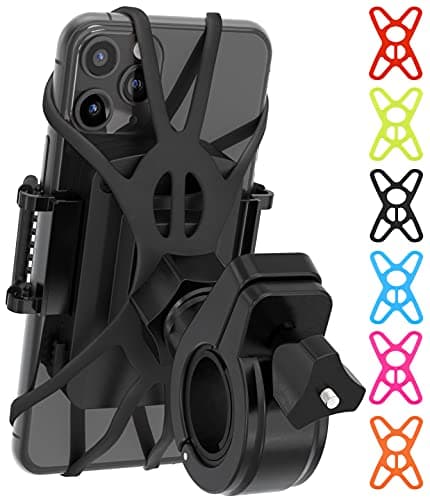
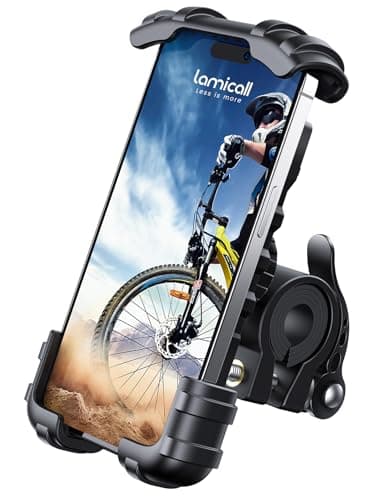
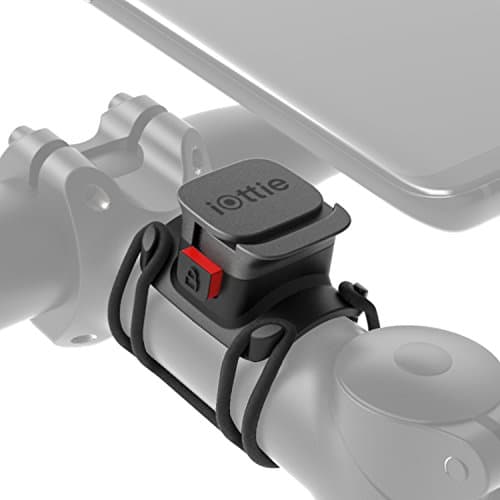
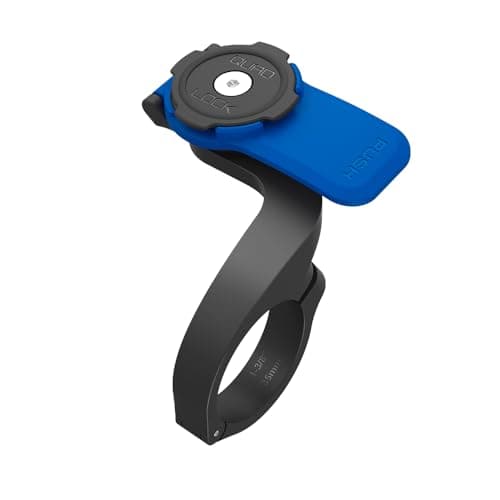
There are only two kinds of bike phone mount.One bonds a mechanical interface to your phone — usually through a case — and the phone twists or clicks onto the bike. The other squeezes the phone between arms, bands or straps. Everything else about a mount, including the price, follows from that single choice, so this page ranks on it rather than on arm length or finish.
The second thing this page ranks on is what the seller is willing to publish, and that turned out to be the more interesting column, because the relationship between price and published specification here runs backwards. The Rokform publishes a handlebar range of 22.2–35 mm. The Bone strap publishes a phone range of 4.7–7.2 inches. The TruActive clamp publishes 4–7 inches. The most expensive mount on the page, from Peak Design, publishes the phrase “Fits Most Handlebar Sizes” and no millimeters at all.
If you are still deciding whether to use a phone as a head unit rather than buying one, bike computer versus phone is the argument and this is the hardware. If you arrived from a navigation question, the bike computer roundup is the other half of the decision.
What nobody publishes: a retention test
Not one of these eight listings publishes a retention figure, a vibration rating, a shock standard or a drop test. Not the cheapest clamp, and not the machined-aluminum mount at the top of the price range. This is a category whose entire failure mode is a phone leaving the handlebar at speed, and the specification that would describe that risk does not appear in any listing we read on 5 October 2026.
We have not tested these mounts and we are not going to invent the number nobody publishes. What we can do is name the mechanism, because mechanism is visible and auditable:
- A locking interface transfers load through a bonded plate on the case into a mechanical catch. Its failure modes are the catch wearing, the case flexing, or the adhesive pad on a universal adapter letting go in heat.
- A clamptransfers load through friction on the phone’s edges. Its failure modes are a spring weakening, an arm flexing under a large phone, and a side button held down for an entire ride.
- A strap transfers load through elastic tension. Its failure modes are UV and heat hardening the silicone, and tension dropping as the strap ages.
All three work. They fail differently, on different timescales, for different reasons — which is why “which is strongest” is the wrong question and “which failure can I see coming” is the right one. Strap wear is visible. A tired clamp spring is not.
The case question, which is the real question
The first completion Google offers for this category is best bike phone mount without case, and it is the correct instinct to interrogate. A locking mount is not a product, it is an ecosystem: the mount, plus a case for your current phone, plus a new case when you change phone. Quad Lock and Peak Design both sell universal adapters that stick to a phone or to an existing case, which is the escape hatch — and an adhesive pad is also the component most likely to let go on a hot day on a black handlebar.
Clamps and straps have no ecosystem at all, which is their real advantage. The cost is that they touch the phone where you least want it touched: the side buttons, the screen corners, and on a curved-edge display, the glass itself. If you share a bike, or if you replace phones often, that trade is usually worth making.
Handlebar diameter: the number that decides whether it fits
Three diameters cover almost every bike. Road drop bars and most flat bars are 22.2 mm out at the grip area; the clamp area beside the stem is 31.8 mm on current road and gravel bars and 35 mmon a lot of modern mountain bars. A mount that publishes 22.2–35 mm, as the Rokform listing does, covers all three. A mount that publishes “most” is asking you to find out after it arrives.
One practical note that catches people out: on a drop bar the only flat real estate is next to the stem, and that is where the bar is thickest. If your bar already carries a light and a computer mount, measure the free span before you buy anything — and if you are re-wrapping the bars anyway, the bar tape roundup covers what gets disturbed when a clamp goes on over the wrap.
Where to put it: out front, over the stem, or on the bar
Out front puts the screen in the same place a bike computer sits: in your natural sightline, so a glance is a glance rather than a look down. It is also the most exposed position in a crash and the most leveraged on rough ground, because the phone hangs off an arm.
Over the stemis the most protected and the most compact, and it costs you sightline — you look down rather than ahead. It is also where most stem-top mounts collide with a computer mount, so in practice you pick one.
On the bar beside the stem is the universal answer, and it is where every clamp in this list is designed to go. It works, it is cheap, and it puts a wide object exactly where your hands land when you ride on the tops.
What a phone on the bars does not replace
A mount holds a phone. It does not make a phone waterproof, it does not extend the battery, and it does not stop a screen going unreadable in direct sun — the three reasons our computer-versus-phone comparison still ends up recommending a dedicated head unit for long days. It also does nothing for visibility. Federal bicycle regulation requires four kinds of reflector on a new bicycle and no mirror or electronics of any kind, so being seen stays a lights-and-mirror problem: bike lights and bike mirrors cover those separately.
What we could not check
We have not ridden with these mounts, dropped them, or measured how hard a phone is to pull out of one. Every specification above is the live Amazon listing text for the exact ASIN linked, read on 5 October 2026, and where a listing publishes no handlebar range or phone size — which is five of these eight — this page says so instead of estimating one. Brand product pages for Quad Lock, Peak Design and Rokform were requested as secondary sources and all three returned errors to automated retrieval, so nothing here is quoted from them.
Three of the mounts above are case-based ecosystems rather than clamps, and choosing between them commits you to a case you will rebuy with every phone. That three-way is its own page: Quad Lock versus Peak Design versus Rokform, where only one of the three publishes a handlebar diameter range.