Can You Ride an E-Bike in the Rain?
Yes. Every e-bike sold as a bicycle is built to be ridden outdoors, and rain is outdoors. What changes is what you do afterwards, and what you must never do with a hose.

Heads up: we earn a commission if you buy through the links on this page, at no extra cost to you. It never decides what makes the list — here’s how that works.
Yes — you can ride an e-bike in the rain. What you cannot do is submerge it, leave it standing in water, or clean it with a pressure washer, and that last one is the only instruction either major drive manufacturer actually publishes in writing. Ride in it, dry it, re-lubricate the chain, and store the bike and battery indoors. That is the whole answer, and the rest of this page is the evidence behind it plus the one question we are going to decline.
Here is the uncomfortable starting point. We went through all twelve e-bike listings in our catalog looking for a water rating. Not one publishes an IP rating. Not IPX4, not IP54, not IP65 — nothing. Four of the twelve publish a UL certification and the other eight publish nothing about water or electrical safety at all.
Now compare that to the bike lights on this site, which cost a tiny fraction of an e-bike. The Cygolite Metro 800’s own listing publishes IP67. The Cygolite Hotshot Pro publishes IP64. The NiteRider Lumina publishes IP64. The Lezyne Strip Drive Pro publishes IPX7. A light is routinely sold with a checkable ingress figure. The electrically powered vehicle it is bolted to is not.
What a UL certification does and does not tell you about water
Four of our twelve e-bikes publish a UL claim — two citing UL 2849 by number (“UL2849 Certified”, “Certified to UL2849”) and two saying only “UL Certified”. UL 2849 is the standard for the electrical system of an e-bike, and it is a genuinely valuable thing to see on a listing, mostly for fire and charging reasons.
It is not a water rating. Intertek’s published description of what UL 2849 certification assesses lists eight areas: electrical safety, battery safety, mechanical safety, environmental, performance, charging system, labelling and connectivity. The environmental item is described as evaluating performance and safety “under various temperature and humidity conditions”. Humidity is not immersion, and no water-ingress or IP test appears anywhere in that published list. So a UL 2849 mark is good news about the battery and the charger, and tells you nothing about riding through a puddle.
The two water instructions that are actually published
No bike in our catalog ships a public manual we can read. The two largest drive-system manufacturers do publish, and both say the same thing in near-identical language. These are the strongest published statements available on e-bikes and water, and note what they are about: cleaning, not riding.
Bosch eBike Systems, in its own care guidance: “Under no circumstances should you use a steam jet or high-pressure cleaner, as water can penetrate into sensitive components such as the drive”.
Shimano, in the STEPS EP801/EP600 user’s manual: “Do not clean the bicycle with a high-pressure wash. If water gets into any of the components, operating difficulties may occur”, with the recommended method being a cloth and a neutral detergent diluted with water.
Read those carefully and you get a reasonable model of the engineering: these systems are sealed against falling water and road spray, which is what rain is, and are not sealed against water being driven at them under pressure or standing around them. That is the line, and it is the line we would draw for riding too — rain yes, fording a flooded underpass no.
The question we are not going to answer
One of the most common ways this is searched is some version of “can you get electrocuted riding an electric bike in the rain”. We are not going to answer it, and we want to be specific about why rather than just skipping it.
It is a personal safety question. Answering it responsibly would require published test data about water ingress into a live electrical system on these specific bikes. As established above, not one of these twelve listings publishes any ingress rating at all, so there is nothing to reason from. The site’s rule is that we do not fill a gap like that with a reassuring sentence, and a reassuring sentence is exactly what the question invites.
What we can tell you is what the listings do publish: these are low-voltage direct-current systems, with 48 V and 52 V batteries named on the listings that publish a voltage at all. And what the two drive manufacturers publish is the pressure-washer warning above. If you want a judgement on electrical risk in the wet, the right source is the manufacturer of your specific bike, in writing, and if they will not put it in writing that is itself information.
What to look for before you ride in the wet
Three checks, and only one of them is about the motor.
One: your braking distance, which is the real change. Wet brakes work less well on any bike, and an e-bike is heavier and often faster, which compounds it in both directions. Most bikes in our catalog publish disc brakes and several publish hydraulic ones, which hold up better in the wet than rim brakes — the argument our brakes comparison sets out. Whatever you have, brake earlier.
Two: being seen, which gets worse faster than you expect. Rain plus spray plus a grey sky is the visibility case daytime running lights exist for, and this is the one category where the published figure is on your side — the ingress ratings above are real and checkable.
Three: the chain, which pays for the ride afterwards. Rain strips lubricant and carries grit into the rollers. On a mid-drive e-bike the chain is also carrying motor torque, which is the argument behind our e-bike lube page. A wet ride is a re-lubrication event, not an optional one.
The three things a wet ride actually calls for
Not a ranking — these are the three items the checks above decide, and they are deliberately boring: something to keep the rain off you, a light with a published ingress rating, and lubricant for the chain the rain just stripped. Nothing here waterproofs the bike, because no product does.
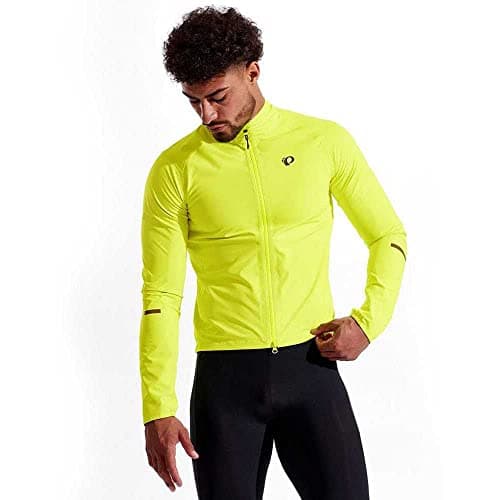
Pearl Izumi Attack WxB Jacket
The rain shell with a published number behind the word: Pearl Izumi lists it at 10k waterproof and 10k breathability, 3-layer and fully seam sealed. Our jackets roundup found only two of seven brands publish a rating at all.
$64.99 · View on Amazon$150.00 −57%
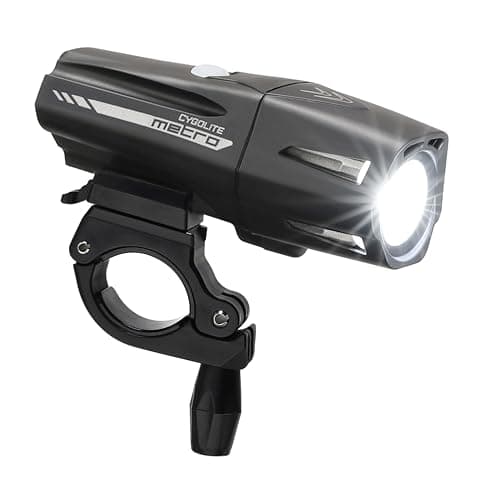
Cygolite Metro 800
A front light whose own listing publishes IP67 and a daytime mode — the figure the bike itself does not print. 800 lumens, hard mount, USB rechargeable.
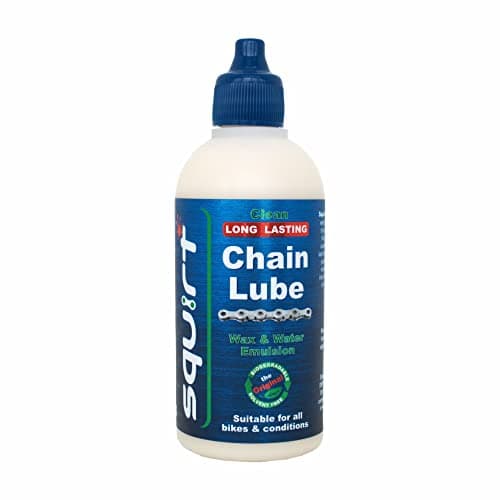
Squirt Chain Lube
The chain lubricant our e-bike lube page assigns to all-year commuting on a hub-drive bike. The job here is replacing what the rain washed out, which is the part of a wet ride that costs money if skipped.
$14.25 · View on Amazon$15.38 −7%
We haven’t tested any of these — they’re the parts the job above calls for, listed so you don’t have to go hunting. Prices are live from Amazon and we earn a commission if you buy. Prices as of October 18, 2026. #ad
After the ride: four things, in this order
One: dry it, don’t blast it. A cloth over the frame, the display, the battery contacts and the motor housing. No hose at pressure, per both manuals above. If you want the full procedure, Park Tool’s published wash order is the backbone of our whole-bike cleaning guide, and the e-bike-specific variations are in the maintenance guide.
Two: re-lubricate the chain while it is clean and damp-dry. This is the single highest-value thing on the list and the one most often skipped. Our chain cleaning guide is the procedure.
Three: take the battery off and bring it inside. Seven of our twelve listings describe the battery as removable. Charging and storage are the part of e-bike ownership with the most published guidance and the least room for improvisation — the battery care page collects what the makers actually say, including the temperature ranges.
Four: don’t store the bike wet. A bike put away wet is a bike with a rusting chain, which is a slower and more expensive problem than a wet ride. That is the whole argument of how to store a bike, and the rust removal page exists because people learn it the hard way.
The honest summary
Rain is fine. Standing water is not. Pressure washers are the one thing both Bosch and Shimano put in writing, and both say don’t. Nobody publishes an ingress rating for the bikes themselves, which means the confident numbers you will find elsewhere on this question are not coming from the manufacturers — and if a figure like “IPX4” is quoted to you for a specific bike, ask where it was published, because it is not in the listing.
Common questions
Can you ride an e-bike in heavy rain?
Riding in rain, including heavy rain, is what any bicycle is built for, and the drive systems are sealed against falling water and road spray. The line is water under pressure or standing water: Bosch publishes that you should under no circumstances use a steam jet or high-pressure cleaner, and Shimano publishes the same instruction for its STEPS systems. Riding through deep standing water puts the motor and connectors below the waterline, which is the condition neither maker covers.
Are e-bikes waterproof?
No consumer e-bike is waterproof, and more to the point, none of the twelve e-bike listings on this site publishes any ingress rating at all — no IP figure, no IPX figure. “Water resistant” is the honest description, and the degree is not published. By contrast, four of the bike lights here publish IP67, IP64 or IPX7 in their own listings.
Does a UL2849 certification mean an e-bike is safe in water?
No. UL 2849 covers the electrical system, and Intertek’s published description of the assessment lists electrical, battery, mechanical, environmental, performance, charging, labelling and connectivity testing — with the environmental item described as temperature and humidity. No water-ingress or IP test appears in that published list. A UL 2849 mark is meaningful for fire and charging safety and says nothing about puddles.
Can you pressure wash an e-bike?
No. This is the clearest published instruction in the category. Bosch: “Under no circumstances should you use a steam jet or high-pressure cleaner, as water can penetrate into sensitive components such as the drive.” Shimano: “Do not clean the bicycle with a high-pressure wash. If water gets into any of the components, operating difficulties may occur.” Use a cloth and diluted neutral detergent.
What should I do to my e-bike after riding in the rain?
Dry it with a cloth — frame, display, battery contacts, motor housing. Clean and re-lubricate the chain while it is still accessible. Remove the battery if yours is removable and bring it indoors. Store the bike dry rather than putting it away wet, which is what causes chain rust.
Will riding in the rain void my e-bike warranty?
We cannot tell you, because warranty terms are specific to your bike’s manufacturer and none of these listings publishes its warranty text. What we can say is that both published drive-system manuals single out pressure washing rather than rain, so that is the behaviour most likely to be treated as misuse. Read your own paperwork.
Sources
- Bosch eBike Systems — Caring for your eBike (“Under no circumstances should you use a steam jet or high-pressure cleaner, as water can penetrate into sensitive components such as the drive”; clean regularly with gentle bike shampoo). Cited elsewhere on this site with its original retrieval date — retrieved 8 August 2026
- Shimano STEPS EP801/EP600 User's Manual UM-7K70A (“Do not clean the bicycle with a high-pressure wash. If water gets into any of the components, operating difficulties may occur”; clean with a cloth and neutral detergent diluted with water). Cited elsewhere on this site with its original retrieval date — retrieved 8 August 2026
- Intertek — UL 2849 Electrical Systems for eBikes certification. The eight published assessment areas (electrical safety, battery safety, mechanical safety, environmental, performance, charging system, labelling and documentation, connectivity), with environmental testing described as evaluating performance and safety “under various temperature and humidity conditions”. No water-ingress or IP test is named — retrieved 5 October 2026
- Ingress-rating audit — the stored live Amazon listing titles of all twelve e-bikes in content/catalogue.json: zero publish an IP or IPX rating; four publish a UL claim (“UL2849 Certified”, “Certified to UL2849” and two reading “UL Certified”); 48 V and 52 V are the battery voltages published where a voltage appears at all
- Published ingress ratings for the lights quoted above, each from its own live listing: Cygolite Metro 800 “IP67 Waterproof”, Cygolite Hotshot Pro “IP64 Water Resistant”, NiteRider Lumina OLED Boost 1200 “IP64 Water Resistant”, LEZYNE Strip Drive Pro 400+ “IPX7 Waterproof” — retrieved 17 July 2026
- Google Autocomplete — “can you ride an ebike in the rain” returns as a completion along with “in light rain”, “in heavy rain” and “can you get electrocuted riding an electric bike in the rain”; “are ebikes waterproof” returns “water resistant”, “are all ebikes waterproof” and several brand variants — retrieved 5 October 2026
Read next
- E-bike maintenance guide
The full post-ride procedure, with both makers' cleaning instructions in context.
- How to charge and store an e-bike battery
Where the battery goes after a wet ride, and the published temperature ranges.
- The best e-bike accessories
The lights with published ingress ratings, and the rest of the short list.
- How to clean a bike
Park Tool's published wash order — dirtiest first, and the disc brake rule.
- How to remove rust from a bike chain
What a bike put away wet looks like a month later.
- The best chain lube for e-bikes
Why the interval matters more than the bottle, and more again in the wet.
We haven’t ridden or tested any of the products on this page, and we don’t pretend otherwise. Read how we research — or tell us we’re wrong and we’ll log the correction.